
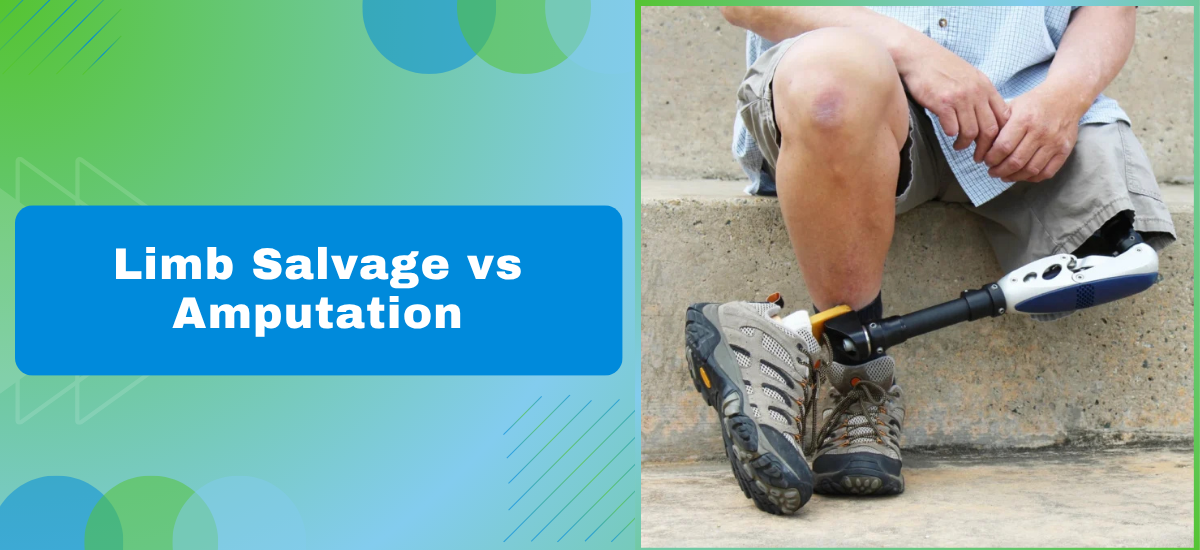
Surgeons choose between limb salvage and amputation based on three primary factors: vascular viability, nerve function, and whether the preserved limb can realistically support daily activity. Salvage reconstructs the limb through microsurgery and flap coverage; amputation removes it when reconstruction would leave the patient with less function than a prosthetic. The decision isn’t about saving the limb at any cost. It’s about which option gets the patient back to life with the least long-term damage.
According to Dr. Leena Jain, an experienced best plastic surgeon in Bandra, “The cases I worry about most are ones where salvage gets pursued past its clinical window a limb that’s structurally present but neurologically finished will disable a patient far more than any prosthetic would.”
What Clinical Factors Push Surgeons Toward Limb Salvage?
Several markers get evaluated together in the first hours after injury, and none of them alone closes the case.
- Vascular window: Six hours. That’s roughly the outer limit for arterial repair before ischaemic muscle crosses into necrosis and no reconstruction reverses that, so the clock matters more than the imaging in those early hours.
- Bone gap: Defects under 6 cm can usually be handled with bone transport or grafting. Larger gaps are a different problem entirely staged reconstruction across multiple procedures, and each one brings its own infection risk, recovery setback, and cumulative toll on the patient.
- Nerve continuity: Partial injuries with the nerve still intact often recover meaningfully over a year or more of targeted rehab. Complete high-level transection of a major trunk is a different situation distal function below that level becomes unlikely enough that it has to factor into whether salvage makes clinical sense.
- Contamination: Grade IIIC open fractures with agricultural or soil debris don’t just complicate wound healing. They can escalate into systemic infection within 24 to 48 hours. So that finding shifts the risk picture faster than almost anything else on the assessment list.
Getting a limb reconstruction surgery assessment before committing to a surgical path is what separates a planned decision from one made under pressure.
When Does Amputation Actually Give a Better Outcome?
Not a failure. In certain presentations it’s the faster, safer, and more functional choice and surgeons who don’t say that clearly do their patients a disservice.
- Sepsis driving the picture: When the limb is the source of toxaemia and the patient is haemodynamically unstable, this stops being an orthopaedic decision. Amputation can be the only intervention that stabilises someone in time. Delay costs lives, full stop.
- MESS above 7: The Mangled Extremity Severity Score combines vascular injury, skeletal damage, shock, and age into one number. Scores above 7 predict failed salvage consistently enough that most surgeons won’t override it without something very specific pulling them in the other direction.
- Hand involvement: Upper limb injuries need careful evaluation of hand surgery options first replantation, partial amputation, flap coverage because even partial grip or sensation in a hand is worth more functionally than the equivalent outcome anywhere in a lower limb.
- Salvage that’s already failed: Two or three reconstruction attempts with a functional plateau still well below what a prosthetic would give is a signal, not a reason to try again. Most patients, looking back, wish someone had been blunt about that earlier rather than later.
The injury patterns that shape these decisions are explored further in our blog on finger amputation and reattachment.
Why Choose The Plastic Surgery Clinic?
Dr. Leena Jain brings 7+ years in plastic and reconstructive microsurgery across trauma reconstruction, limb salvage, diabetic foot surgery, and free flap procedures, trained under globally recognised microsurgeons where the standard was always functional recovery not just a technically clean operation.
What patients consistently say is that nobody gave them false reassurance before surgery. They were told what each option would realistically look like at 6 months, at 12, and what daily life would involve. That kind of honesty before the first incision changes how people recover. And it shows.
FAQs
What is the first thing assessed when deciding between limb salvage and amputation?
Vascular status. Blood supply to the limb determines tissue viability within the first critical hours.
Can limb salvage surgery fail after the initial procedure?
Yes. Infection, flap failure, or poor nerve recovery can require revision surgery or late amputation.
How long does recovery take after limb salvage surgery?
Typically 6 to 18 months, depending on reconstruction complexity and rehabilitation compliance.
Is amputation ever recommended even when the limb can technically be saved?
Yes, when the salvaged limb’s predicted function is meaningfully worse than a well-fitted prosthetic.
References –
- Limb Salvage Outcomes in Trauma Surgery — National Center for Biotechnology Information, NIH
2. Mangled Extremity Severity Score in Clinical Practice — National Institutes of Health
