
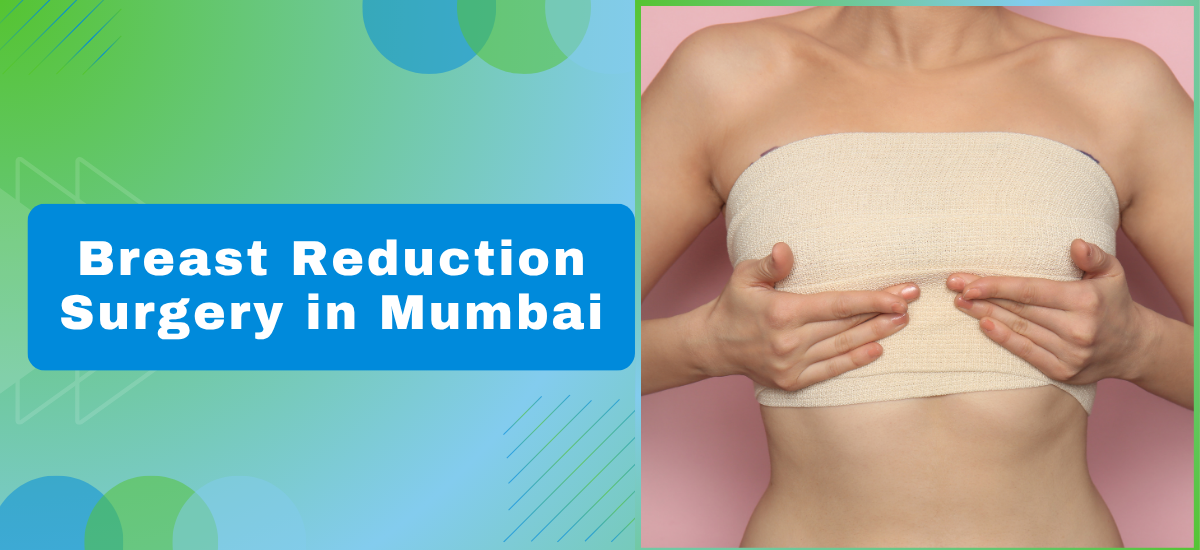
Women often live with the physical strain of disproportionately large breasts for years, enduring back pain, shoulder grooves, and restricted activity before seeking surgery. The decision is usually driven by discomfort rather than appearance. Breast reduction surgery, or reduction mammoplasty, removes excess tissue, fat, and skin to achieve a chest proportionate to the patient’s frame. It also reshapes and elevates the remaining tissue, addressing both symptoms and contour. Most patients report lasting relief, better posture, and greater ease in daily activity after recovery.
According to Dr. Leena Jain, one of the best plastic surgeons in Mumbai, Breast reduction is one of the few cosmetic procedures where patients report relief from physical symptoms before they comment on the aesthetic outcome.
Are you experiencing chronic back, neck, or shoulder pain related to breast size?
When Should You Consider Breast Reduction Surgery?
The decision to pursue surgery typically follows a sustained period of physical or functional difficulty. If the symptoms below are familiar, a clinical evaluation for breast surgery in Mumbai is advisable.
Common indications include:
- Chronic neck, shoulder, and upper back pain that does not respond to conservative measures
- Visible grooves on the shoulders caused by bra straps
- Skin irritation or rashes beneath the breast crease, particularly during humid conditions
- Difficulty performing physical exercise or routine activities
- Postural changes, including rounding of the upper back
- Challenges in finding clothing that fits comfortably
- A sense that the breasts are disproportionate to the rest of the body
- Psychological discomfort or social self-consciousness related to breast size
The presence of two or more of these indications generally warrants a consultation with a qualified plastic surgeon to evaluate suitability for the procedure.
How Is the Procedure Performed?
The surgical approach is selected based on the patient’s anatomy, the volume of tissue to be removed, and the desired outcome. The technique is determined during consultation, prior to any treatment plan being finalised. In many cases, the procedure also involves areolar repositioning and resizing, which may be combined with nipple reduction surgery for improved proportion and symmetry.
The three primary techniques are:
- Liposuction only: Suitable for minor reductions where the breast tissue is predominantly fatty and the skin retains good elasticity. A thin cannula is introduced through small incisions, and excess fat is suctioned. Scarring is minimal, though the application is limited.
- Lollipop (vertical) technique: The most frequently used approach. The incision is made around the areola and extends vertically to the breast crease. Excess tissue is removed, the breast is reshaped and elevated, and the areola is adjusted in size and position. This technique provides good contour with relatively limited scarring.
- Inverted-T (anchor) technique: Indicated for significantly enlarged breasts with marked sagging. The incision pattern extends around the areola, vertically to the crease, and horizontally along the crease itself. Scarring is more extensive, but the technique allows for substantial tissue removal and reshaping.
The total operating time is typically two to four hours, depending on the technique selected and the volume of tissue removed. The procedure is performed under general anaesthesia.
What Does Recovery Look Like After the Surgery?
A clear understanding of the recovery timeline allows patients to plan appropriately and supports a smooth outcome from the procedure.
Recovery generally proceeds as follows:
- Drainage tubes may be placed at the surgical site for two to three days to manage postoperative fluid.
- Waterproof dressings are applied, allowing patients to shower the day after surgery.
- Absorbable sutures are used in most areas. Non-absorbable sutures around the areola are removed at approximately one week.
- A surgical bra is worn during the early healing phase to provide support.
- Light daily activity may be resumed within a few days, and most patients function independently soon after.
- Strenuous activity and physical exercise should be avoided for four to six weeks to prevent scar widening.
- Swelling gradually subsides over several months. The final breast shape becomes evident at approximately three months, when a regular bra may be worn.
- Surgical scars initially appear red and prominent, then fade significantly over eight to ten months. They do not disappear entirely but generally become inconspicuous.
For more on related breast contouring options, see our guide on fat grafting for breast enhancement.
Would you like to know which surgical technique is most appropriate for your case?
FAQs
How long does the surgery take?
The procedure typically takes two to four hours, depending on breast size and the technique used. A precise estimate is provided at consultation.
What are the associated risks?
As with any surgical procedure, risks include scarring, possible changes in nipple sensation, bleeding, and bruising. Most effects are temporary, and serious complications are uncommon.
Is there an age limit for the surgery?
There is no upper age limit. The procedure is recommended once breast development is complete, generally from the late teens onward.
Can a standard bra be worn after surgery?
Yes, once postoperative swelling has fully subsided, which typically occurs at approximately three months.
Are the results permanent?
The results are long-lasting. Pregnancy or significant weight fluctuation may affect breast shape over time, but with stable weight, the outcome remains durable.
