
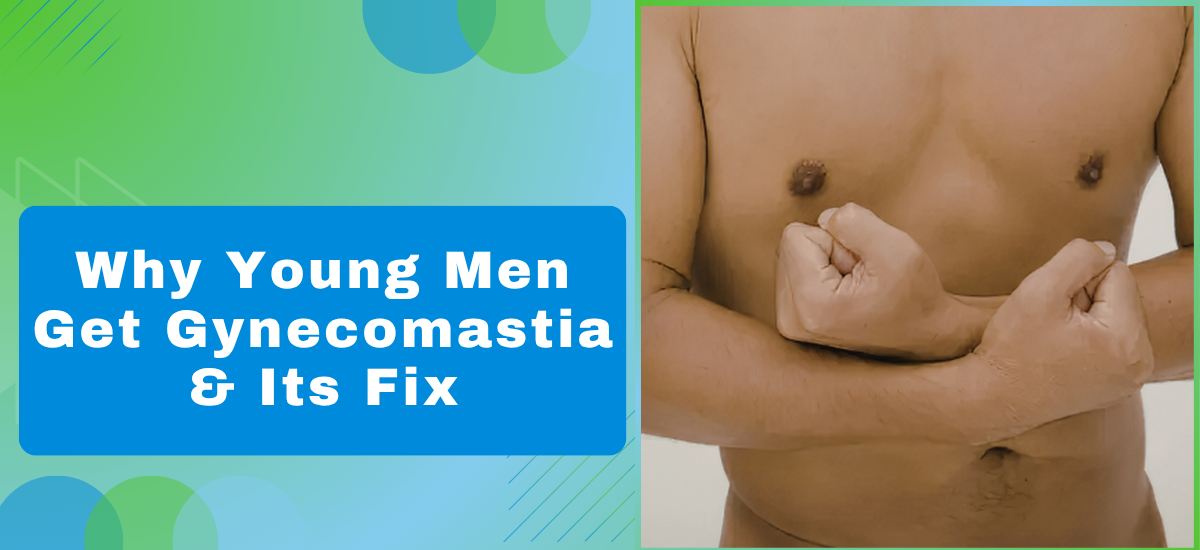
Gynecomastia is the enlargement of glandular breast tissue in males. In young men it usually stems from a temporary hormonal imbalance, with estrogen running higher than testosterone. Most cases are harmless and resolve on their own. Treatment is considered when the tissue persists past puberty, causes psychological distress, or brings physical discomfort.
According to Dr. Leena Jain, One of the best plastic surgeon in Bandra, True gynecomastia is glandular, so you can feel a firm disc beneath the nipple, and that’s what tells us it won’t melt away at the gym.
What Causes Gynecomastia in Young Men?
Comes down to the estrogen-testosterone balance getting knocked off by hormones, drugs, or some underlying condition. Here’s the usual suspects.
Puberty: Adolescent hormones are all over the place, and a short estrogen spike can puff up breast tissue. Good news is it tends to fade by itself inside a year or two.
Medications: Some steroids, certain anti-androgens, even a few anxiety meds can shift things enough to set it off.
Health conditions: Thyroid trouble, liver or kidney problems, the odd tumor, all of these mess with hormone output. Persistent cases? Get them checked properly.
Lifestyle factors: Booze, some recreational drugs, gym supplements with anabolics. They all bump estrogen, and we see this in young lifters way more than you’d guess.
Thing is, not every lump is gynecomastia. Could be fat. Could be something worth investigating. Guessing helps nobody.
When the tissue overlaps with fatty distribution, treatment sometimes borrows from Tummy Tuck techniques.
When Does Gynecomastia Need Treatment in Young Men?
Treatment’s on the table once the tissue lingers past puberty, knocks someone’s confidence, or causes physical discomfort. After that, you match the fix to the cause.
Observation: Puberty cases often just get watched. Plenty resolve on their own once hormones level out, so nobody’s rushing to operate.
Treating the trigger: Medication or condition driving it? Sort that out and the tissue can shrink without any surgery at all.
Liposuction: Mostly fat? Liposuction pulls it out through tiny cuts. Minimal scarring, flatter chest.
Gland excision: Firm glandular tissue ignores liposuction, so it has to be cut out directly. Often paired with lipo for the cleanest contour.
Surgery’s usually reserved for tissue that persists or causes real distress. Recovery is quick, and a compression garment helps the chest settle.Patients often find the relief greater than expected, similar to what’s discussed in burn scar contracture treatment.
Why Choose Dr. Leena Jain?
Dr. Leena Jain is a Plastic, Reconstructive and Microsurgeon. MCh in Plastic Surgery, plus a Fellowship in Microsurgery and Perforator Flaps from Hanyang University in Seoul, and 7 years-plus across cosmetic and reconstructive chest work.
Young men who’d skipped the pool and dodged fitted shirts for years have left with a flat, natural chest. She builds the procedure around your frame and skin, so it doesn’t look done. Just looks like you.
Firm lump under the nipple that workouts won’t budge?
FAQs
Does gynecomastia in teenagers go away on its own?
Often yes, puberty-related cases resolve within one to two years as hormones stabilize.
Can exercise alone get rid of gynecomastia?
No, glandular tissue won’t shrink with workouts, though exercise helps if it’s mostly fat.
Is gynecomastia surgery permanent?
Usually yes, removed gland tissue doesn’t grow back unless a hormonal trigger returns.
Will gynecomastia surgery leave a visible scar?
Incisions are small and placed discreetly, so scars are minimal and fade over time.
