
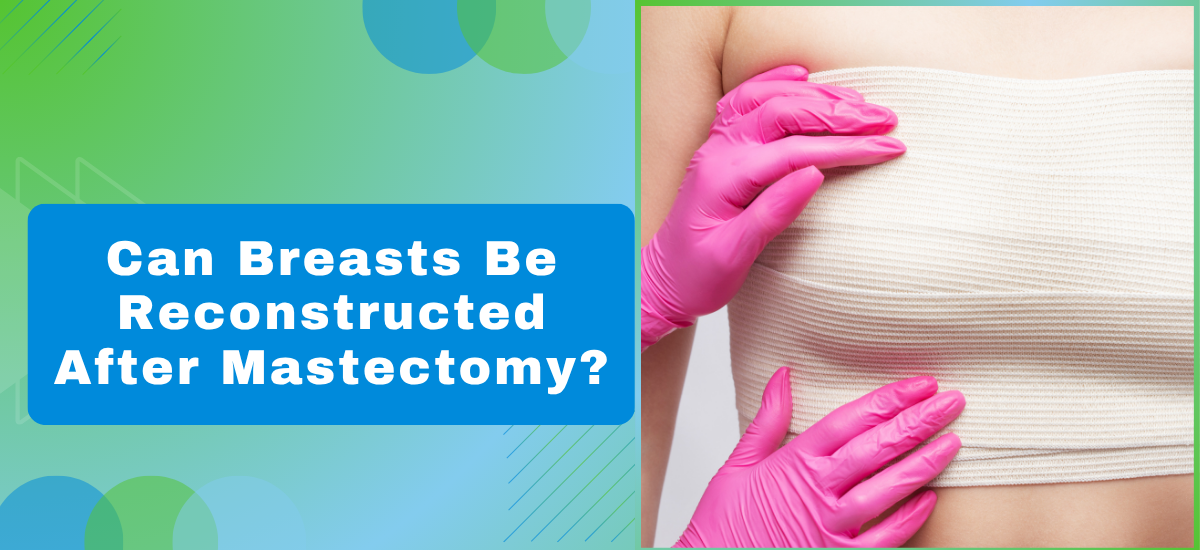
Yes. Breasts can be reconstructed after mastectomy. The options are implants or the patient’s own tissue, sometimes a combination of the two. And the timing is flexible. Some patients have reconstruction during the same operation as the mastectomy, others much later. The aim throughout is to restore shape and symmetry without compromising cancer care. The decision breaks two ways. Which technique fits the body and treatment plan. And when it’s best done.
According to Dr. Leena Jain, One of the best plastic surgeon in Borivali, “Reconstruction follows the cancer treatment, not the other way around. The disease is treated first, with reconstructive options preserved throughout.
What Are the Main Types of Breast Reconstruction?
Two routes dominate. Implants, or the patient’s own tissue, with combinations of the two where it helps. These are the main approaches.
Implants first: A silicone or saline implant rebuilds the shape, usually after a tissue expander has stretched the skin over weeks to make room for it.
The body’s own tissue: Skin, fat, sometimes muscle is moved from the abdomen, back, or thigh to the chest. The result feels natural and carries its own blood supply.
Why DIEP?: This flap uses lower abdominal skin and fat without sacrificing muscle, which preserves abdominal strength compared to older techniques.
Mixing both: Some patients have an implant supported by a small flap. The combination can give a more natural shape when there isn’t enough tissue alone.
Each option suits a different body, history, and goal. No single technique wins for everyone. The right choice rests on anatomy first, then on what matters most to the patient.
For broader reconstructive work spanning the body, this connects with plastic surgery and trauma care.
When Should Breast Reconstruction Be Performed?
Timing is its own decision. Reconstruction can happen during the mastectomy itself, or months and years later. The choice fits around cancer treatment.
Done together: Reconstruction during the same operation as the mastectomy. It spares the patient a second surgery, and more skin can be preserved, which gives a more natural result.
Done later: Performed months or years after mastectomy. Often the choice when radiation is planned, or when more time is needed before deciding.
Half and half: Some reconstructions start at the mastectomy with a tissue expander and finish later with the final implant or flap, balancing immediate cover with later refinement.
What about radiation?: It can damage reconstructed tissue, so timing is adjusted around it. That often shifts reconstruction to after treatment is complete.
No single timing fits every case. Cancer care sets the pace, and reconstruction works around it. The decision is made jointly, with the breast surgeon and oncologist at the table.
For long-term outcomes of flap reconstruction, read DIEP flap complications years later.
Why Choose Dr. Leena Jain?
Dr. Leena Jain is a Plastic, Reconstructive and Microsurgeon. MCh in Plastic Surgery. Fellowship in Microsurgery and Perforator Flaps, Hanyang University, Seoul. Over 7 years across breast reconstruction and microsurgical work.
Patients have rebuilt shape and confidence after mastectomy through both implant and flap reconstruction under her care. The technique is matched to body and treatment plan, not the other way round. She works alongside the breast surgeon and oncologist, so reconstruction supports cancer care rather than complicating it.
Considering reconstruction after a recent or upcoming mastectomy?
FAQs
Is breast reconstruction safe after mastectomy?
Yes, when planned around cancer treatment it’s safe and widely performed.
Does reconstruction interfere with cancer treatment?
No, timing is adjusted around chemotherapy and radiation to avoid interference.
How long does breast reconstruction take to heal?
Recovery varies by method, but several weeks of limited activity is typical.
Can reconstruction be done years after mastectomy?
Yes, delayed reconstruction is an option even years later for many patients.
