
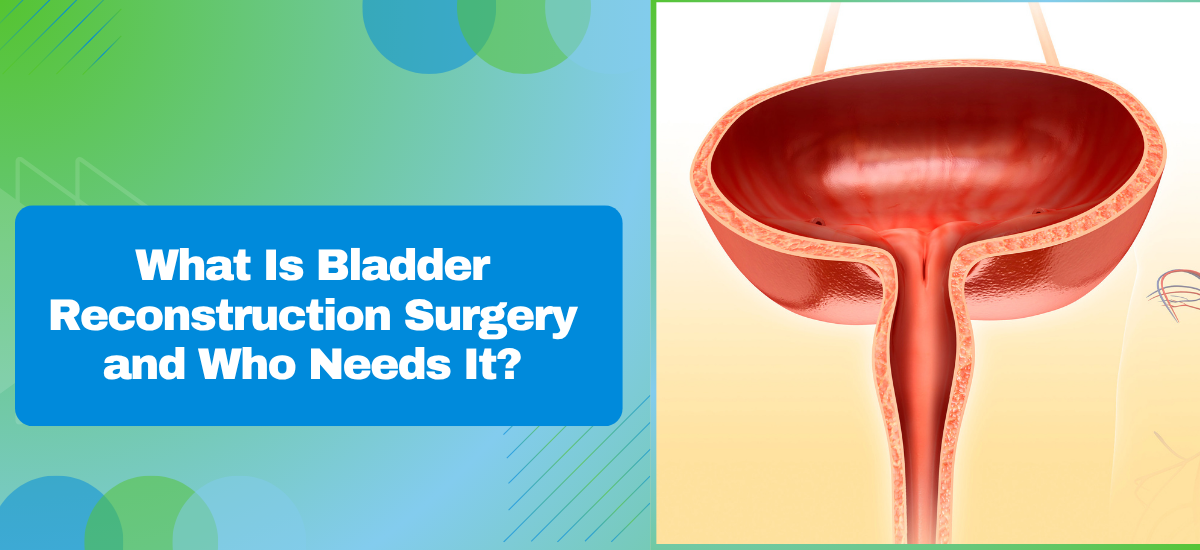
Removing the bladder doesn’t end urinary function. It changes how it works. The body still needs somewhere to store and pass urine, and when the bladder is no longer there, that function has to be rebuilt. Surgeons use a segment of the intestine, reshaped into a pouch, placed where the bladder once sat. Which part of the intestine, and how it’s configured, depends on the patient’s anatomy, the stage of cancer, and whether the urethra is still intact. Most people don’t realise reconstruction is even possible until they’re already facing the diagnosis.
According to Dr. Leena Jain, plastic surgeon in Borivali, “Reconstruction isn’t one size fits all. The goal is to give the patient the most functional and dignified urinary option that suits their body and their life.”
What Are the Main Types of Bladder Reconstruction?
Three surgical options exist. Not every patient qualifies for all three, and the right choice depends on what the anatomy allows and what the patient can sustain over the long term.
- Neobladder: The intestine is reshaped into a pouch connected to the ureters and urethra. Urine passes out the normal way, no external bag involved. Requires an intact urethra and preserved sphincter control. Both conditions have to be met for this option to be viable.
- Ileal Conduit: A short intestinal segment routes urine to a stoma on the abdominal wall, draining into an external bag. Technically simpler, faster recovery. The most frequently performed diversion overall, and often the most practical option.
- Indiana Pouch: An internal reservoir that holds urine without an external bag. Emptied several times daily by self-catheterisation through a small abdominal stoma. More discreet than a conduit, but demands a consistent daily routine the patient has to commit to long term.
The surgical decision isn’t purely technical. It’s shaped by what the patient can realistically manage. For more on the procedure, read about bladder reconstruction surgery.
Who Actually Needs This Surgery?
Not every bladder condition ends here. Some do though, and once the bladder can’t be saved, reconstruction is what comes next.
- Muscle-invasive bladder cancer: When cancer has grown through the bladder wall, the organ typically has to come out. Reconstruction is built into the same surgical plan rather than treated as a separate decision. Most patients who undergo this procedure are here because of this diagnosis.
- Radiation-damaged bladder: Pelvic radiation can damage the bladder gradually, sometimes years after treatment ends. Scarring, reduced capacity, persistent bleeding — these are signs the organ is failing. Surgery is considered when the bladder can no longer function through any other means.
- Neurogenic bladder: Normal bladder function depends on intact nerve signalling. When that’s disrupted by a spinal cord injury or neurological condition, storage and emptying both suffer. Reconstruction is an option once other approaches haven’t been sufficient.
- Congenital defects: A small group of patients are born with bladder abnormalities serious enough that less invasive management eventually stops working. Reconstruction in these cases isn’t a last resort so much as the only option that offers lasting function.
This isn’t a decision one specialty makes alone. The urologist, oncologist, and reconstructive surgeon work through it together, and in conditions like neurogenic bladder where the clinical picture involves several moving parts, getting the sequencing right matters as much as the surgery itself.
Why Choose Dr. Leena Jain for Bladder Reconstruction?
Dr. Leena Jain holds an MCh in Plastic Surgery and completed her fellowship in Microsurgery and Perforator Flaps at Hanyang University, Seoul. Her reconstructive practice spans over seven years, with focused experience in cases at the intersection of urological and plastic surgery.
Bladder reconstruction requires close coordination between the reconstructive surgeon, urologist, and oncologist. She functions as an active part of that multidisciplinary team, with involvement in treatment planning from the point of diagnosis. Patients are counselled on their reconstruction options, the expected recovery, and the functional outcomes before surgery proceeds. To book a consultation, call +91 9820991853.
Recently diagnosed or facing bladder removal?
FAQs
Is bladder reconstruction done during cancer surgery?
In most cases yes. The cystectomy and reconstruction are performed in the same operating session, provided the patient is medically fit for a combined procedure.
Can everyone get a neobladder after cystectomy?
No. A neobladder depends on having a functioning urethra that’s free of cancer involvement. If the urethra has been removed or is directly affected by the tumour, this option isn’t available and an alternative diversion is planned instead.
How long does recovery take after bladder reconstruction?
Six to eight weeks covers the initial recovery for most patients. Adapting to the new urinary system, particularly with a neobladder, takes considerably longer than that.
Does reconstruction affect kidney function?
It can over time. Urine reflux and metabolic shifts following intestinal reconstruction can place gradual stress on the kidneys. Long-term urological monitoring is a standard part of post-operative care for this reason.
Disclaimer: This blog is for educational purposes only. If you’ve been diagnosed with bladder cancer or are experiencing urinary dysfunction, speak to a qualified reconstructive surgeon to understand which procedure is right for you.
