
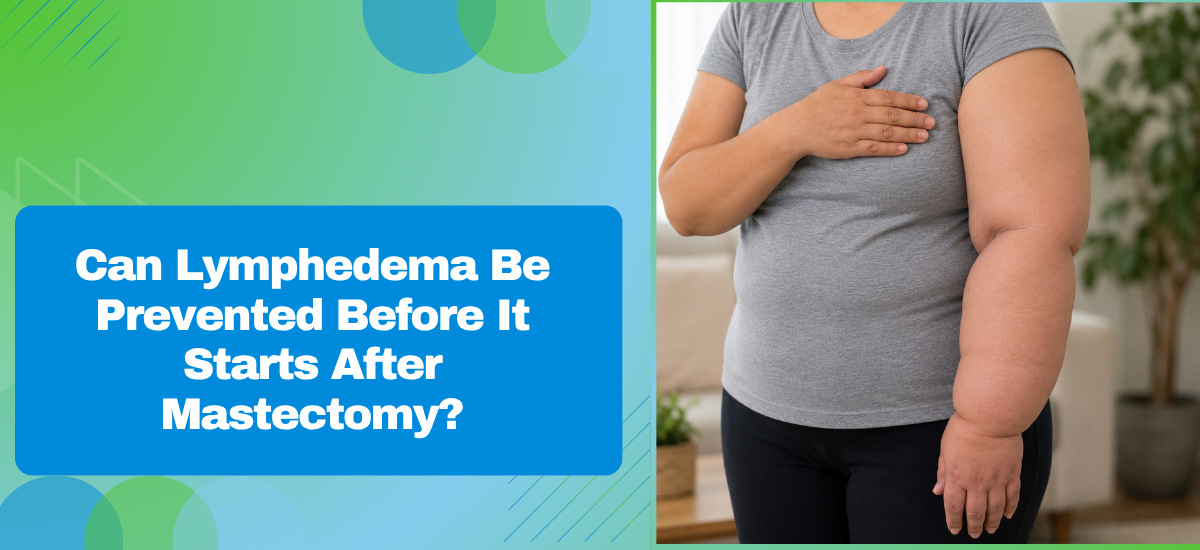
Not every patient who has a mastectomy develops lymphedema. But the ones who do often say the same thing: nobody told them what to watch for in those first few months when the lymphatic system is still adjusting. When lymph nodes are removed, the arm on that side loses drainage capacity. For some patients that resolves. For others, fluid accumulates and the condition becomes chronic. Most patients don’t realise how much that early window shapes the long-term outcome.
According to Dr. Leena Jain, plastic surgeon in Mumbai, “Lymphedema is easier to prevent than to treat. The window right after mastectomy is when the lymphatic system is most responsive to intervention, and that’s when the groundwork for prevention should be laid.”
What Actually Reduces the Risk of Lymphedema After Mastectomy?
Prevention isn’t one decision. It’s several, starting before the mastectomy date and continuing through the months that follow.
- Sentinel node biopsy over axillary clearance: Every lymph node removed is one less drainage point. Where cancer staging allows it, sentinel node biopsy carries considerably lower lymphedema risk than full axillary clearance. That conversation needs to happen before the operation is scheduled, not after.
- Body weight as a clinical variable: Higher BMI at the time of mastectomy is consistently linked to greater lymphedema risk. Excess tissue puts pressure on channels already working with reduced capacity. Not a lifestyle comment. A clinical one.
- Starting arm movement under physiotherapy guidance: Avoiding the arm entirely after surgery is a common instinct. It tends to backfire. Progressive exercises, introduced carefully under supervision, reduce accumulation risk in a way that rest alone doesn’t.
- Looking after the arm on the surgical side: Injections, blood pressure cuffs, cuts, sunburn, insect bites on that arm all carry higher risk than the other side. Inflammation and infection are documented triggers. Simple precautions, with a reason behind them that isn’t minor.
So prevention is less about any single measure and more about treating the post-mastectomy period as a window worth using well. The lymphedema treatment page covers what surgical management looks like when it does develop.
What Are the Early Warning Signs and When Should You Act?
Most patients who develop lymphedema don’t catch it early, not because the signs aren’t there, but because nobody told them what to look for.
- The arm feels heavy before it looks different: Fullness or tightness in the arm, hand, or fingers often shows up before any visible swelling. It comes and goes. Gets written off as normal recovery. Often it isn’t.
- Swelling that shifts through the day: Up by evening, down by morning. The fluid is moving but the tissue hasn’t changed yet. This is where management works best and reversal is still on the table. That window doesn’t stay open.
- The skin feeling or looking different: Firmness, thickening, a texture that wasn’t there before. Once skin starts changing, the condition has moved past the fluid stage. Harder to address from that point.
- The arm losing function: When lymphedema starts limiting everyday tasks, compression and physiotherapy on their own are usually no longer enough. Surgical options need to be part of the assessment at this stage.
And early-stage lymphedema and established lymphedema are not the same clinical problem. For patients already managing the condition after cancer surgery, the day-to-day habits that help are covered in what habits help after cancer surgery lymphedema.
Why Choose Dr. Leena Jain for Lymphedema Assessment and Treatment?
Dr. Leena Jain completed her MCh in Plastic Surgery and holds fellowship training in Microsurgery and Perforator Flaps from Hanyang University, Seoul, alongside an AO Fellowship in Microsurgery and Maxillofacial Trauma from Ludwig Maximilian University, Munich. Over seven years of reconstructive practice, with a particular concentration in post-mastectomy cases and lymphedema surgery.
Patients with lymphedema after breast cancer treatment aren’t dealt with as a separate referral category. The condition is assessed as part of the broader recovery, looking at where things stand, what’s been tried, and what the arm actually needs to function. Where prevention is still possible, that conversation happens before surgery. Where lymphedema is already established, conservative and surgical options are laid out based on stage and what’s realistic. To book a consultation, call +91 9820991853.
Recently had a mastectomy or planning one?
FAQs
Does lymphedema always develop after mastectomy?
No. How many nodes were removed, whether radiation was involved, and how the individual body responds all influence the outcome. Many patients never develop it.
Can lymphedema be reversed once it starts?
When caught at the fluid stage, it can be well controlled and partially reversed. Once tissue has changed structurally, the goal shifts from reversal to long-term control.
Is surgery needed for lymphedema after mastectomy?
Not in every case. Compression and physiotherapy are where management starts. Surgery enters the conversation when those approaches haven’t responded adequately.
How long after mastectomy can lymphedema develop?
There’s no defined window. Some patients notice it within months, others years later. The surgical arm warrants ongoing attention, not just early monitoring.
Disclaimer: This blog is for educational purposes only. If you have recently had a mastectomy or are noticing arm swelling, consult a qualified reconstructive surgeon to assess your lymphedema risk and discuss appropriate management.
