

Genital Aesthetic Surgery in Mumbai
Concerns about genital appearance, comfort, or function are far more common than most women realise, yet they’re rarely spoken about openly. Childbirth, hormonal shifts, ageing, and simple natural variation can all change the shape, size, or symmetry of genital tissue, sometimes causing physical discomfort during exercise or intimacy, and sometimes simply affecting how confident a woman feels in her own body.
This is not a topic that needs to be minimised or brushed away. Whether the concern is physical discomfort, function after childbirth, or a long-standing feeling of self-consciousness, the decision to seek treatment belongs entirely to the patient. What matters is that she has accurate information, a safe surgical environment, and a specialist who treats the conversation with the same clinical seriousness as any other reconstructive consultation.
Dr. Leena Jain, a leading Plastic Surgeon in Mumbai, says:
“There’s still a lot of silence around this area of surgery, but the concerns patients bring to me are completely valid, whether they’re about comfort, symmetry, or simply wanting their body to feel like their own again. My priority is making sure every patient feels safe, heard, and never judged for the choice she’s making.”
If you’re considering genital aesthetic surgery, here’s what it actually involves, what to expect, and how to choose the right specialist.
What Is Genital Aesthetic Surgery?
Genital aesthetic surgery is an umbrella term covering a range of procedures aimed at correcting appearance, restoring function, or relieving discomfort in the genital region. Patients researching this area sometimes come across it described as vulvovaginal plastic surgery or cosmetic female genitoplasty, but the underlying goal is the same: addressing how the tissue looks, feels, or functions, in a way that suits the individual patient.
Labiaplasty:
Reduces or reshapes enlarged or asymmetrical labia minora, which can cause chafing, discomfort in tight clothing, or self-consciousness.
Vaginal Tightening (Vaginoplasty):
Addresses laxity of the vaginal walls, often following childbirth, to restore tone and improve comfort. Patients researching vaginoplasty surgery in Mumbai are usually looking for exactly this: a way to address post-childbirth changes that haven’t improved with pelvic floor exercises alone.
Clitoral Hood Reduction:
Reduces excess tissue around the clitoral hood, sometimes performed alongside labiaplasty for a more balanced result.
Dr. Leena Jain notes:
“There is no single procedure that fits every patient. Understanding exactly what’s bothering someone, physically or emotionally, is what determines the right plan, not a standard checklist.”
Considering genital aesthetic surgery and want a confidential, judgment-free consultation? Speak with a specialist you can trust.
Who Considers Genital Aesthetic Surgery?

Every patient’s circumstances are different, and understanding the range of situations helps normalise a topic that’s still often surrounded by silence.
Women After Childbirth:
Vaginal delivery can stretch tissue and reduce tone, and some women notice ongoing discomfort or reduced sensation that doesn’t improve with pelvic floor exercises alone.
Women With Enlarged or Asymmetrical Labia:
This can cause physical irritation during exercise, cycling, or sex, and for some women it’s simply a long-standing source of discomfort with clothing.
Patients Considering Related Procedures:
Some women exploring genital aesthetic options are also considering hymenoplasty for separate personal or cultural reasons, and both can be discussed in the same confidential consultation.
Women Experiencing Reduced Confidence:
Sometimes there’s no single medical trigger. A patient may simply feel her body has changed in a way she’d like address it, and that’s a legitimate starting point for a consultation.
Regardless of the reason, a good surgical consultation focuses on the physical anatomy and technique required, not on questioning the patient’s motivations.
Types of Genital Aesthetic Procedures
The right technique depends on the specific concern, the anatomy involved, and the patient’s own goals. This branch of surgery is sometimes referred to more broadly as vulvovaginal plastic surgery, since it can involve the labia, vaginal canal, and surrounding tissue depending on what a patient wants addressed.
Trim or Wedge Labiaplasty:
Two common surgical approaches to reducing labial tissue, chosen based on the patient’s anatomy and desired outcome.
Vaginal Tightening Techniques:
Ranges from surgical vaginoplasty to non-surgical energy-based options, depending on the degree of laxity and patient preference.
Combined Procedures:
In select cases, labiaplasty and clitoral hood reduction are performed together for a more proportionate, natural-looking result.
A detailed pre-surgical consultation determines which approach best suits your anatomy and expectations.
How to Prepare for Genital Aesthetic Surgery
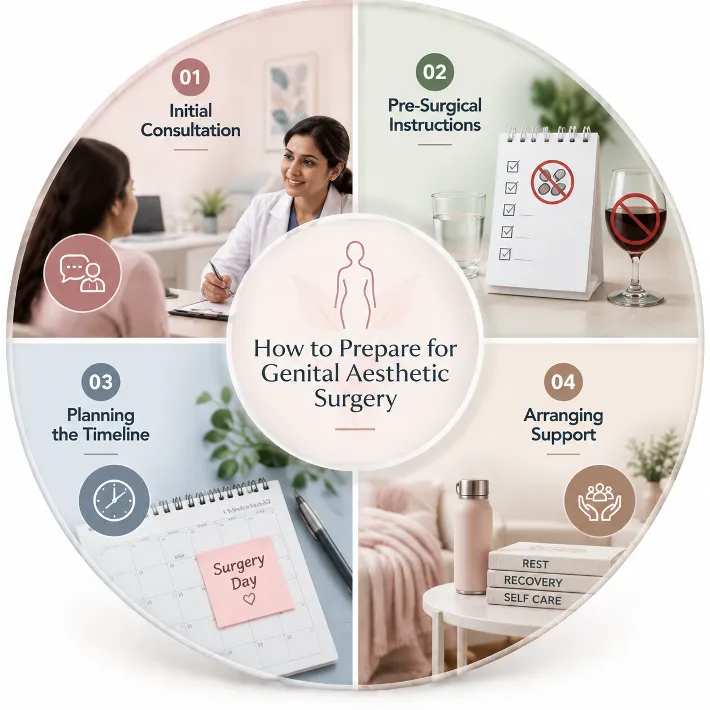
A little preparation goes a long way toward a smooth procedure and recovery.
Initial Consultation:
This includes a private physical assessment, a review of your medical history, and an honest conversation about which technique fits your goals and timeline.
Pre-Surgical Instructions:
You may be advised to avoid certain medications, alcohol, or blood-thinning supplements for a short period before surgery.
Planning the Timeline:
If the procedure is being planned around a specific personal milestone, it helps to schedule surgery with enough buffer time for full healing.
Arranging Support:
Since most procedures are done as a day care, arranging transport home and a quiet day or two for rest afterwards makes recovery easier.
The Procedure: What to Expect

Knowing the process in advance makes the entire experience less daunting.
Consultation and Assessment:
A private, confidential consultation reviews your medical history, goals, and the current anatomy involved.
Anaesthesia:
Most procedures are performed under local or short general anaesthesia, depending on the technique chosen and patient comfort.
The Procedure Itself:
Depending on the technique, genital aesthetic procedures typically take 30 minutes to just over an hour, using fine, dissolvable sutures to minimise scarring in this sensitive area.
Same-Day Discharge:
Dr. Leena Jain explains:
“Precision matters enormously in this kind of surgery because the tissue is delicate. My approach focuses on a natural-looking result with minimal scarring and a comfortable, quick recovery.”
Ready to discuss your options in a safe, private setting? Consult Dr. Leena Jain for expert guidance.
Recovery After Genital Aesthetic Surgery
Recovery is typically quick, but a few precautions matter for the best outcome.
First Few Days:
Mild discomfort, swelling, or light spotting is normal and settles within the first week.
Activity Restrictions:
Sexual activity, tampon use, and strenuous exercise are avoided for the timeframe recommended by your surgeon, usually around 4 to 6 weeks.
Hygiene and Aftercare:
Gentle hygiene practices and any prescribed medication help reduce the risk of infection and support smooth healing.
Follow-Up:
A follow-up visit confirms the tissue has healed well and addresses any questions about resuming normal activity.
Risks and Safety Considerations

Like any surgical procedure, genital aesthetic surgery carries some risks, though complications are uncommon when performed by an experienced surgeon.
Infection:
Following aftercare instructions carefully significantly reduces this risk, which is uncommon but possible with any surgical wound.
Bleeding or Swelling:
Mild swelling and light spotting in the days following surgery are expected; heavier or prolonged symptoms should be reported to your surgeon.
Changes in Sensation:
Temporary numbness or altered sensation can occur during healing and typically resolves as swelling settles.
Unrealistic Expectations:
A clear pre-surgical conversation about what the procedure can and cannot achieve helps avoid disappointment with results.
Choosing a qualified, experienced plastic surgeon for this procedure, rather than an unregulated provider, is the single most important safety decision a patient can make.
How This Fits Alongside Other Reconstructive Procedures
Genital aesthetic surgery is sometimes considered on its own, and sometimes as part of a broader body-confidence journey. Patients recovering from significant weight change or pregnancy occasionally combine it with a tummy tuck to address multiple post-pregnancy changes in one coordinated recovery period. Patients can review Dr. Leena Jain’s full range of expertise in reconstructive and breast surgery.
Why Choose Dr. Leena Jain for Genital Aesthetic Surgery in Mumbai?

Dr. Leena Jain is a Plastic Reconstructive Microsurgeon and Hand Surgeon with over 10 years of specialised surgical experience at Lilavati Hospital, Bandra, and her clinic in Borivali. Her training in microsurgery and precision tissue repair translates directly into the fine, delicate technique genital aesthetic procedures require, whether the concern is labiaplasty, vaginal tightening, or broader cosmetic female genitoplasty in Mumbai. She is known for her calm, non-judgmental approach, ensuring patients feel comfortable discussing sensitive concerns openly and honestly. Every consultation and record is treated with strict confidentiality, and patients can also explore her broader plastic surgery expertise through her published case insights.

Ready to take the next step with complete privacy and expert care? Schedule a confidential consultation with Dr. Leena Jain, a leading plastic surgeon in Mumbai.
FREQUENTLY ASKED QUESTIONS
1. Is genital aesthetic surgery painful?
Most procedures are performed under local or light general anaesthesia, so there is no pain during surgery. Mild discomfort for a few days afterward is normal and manageable with prescribed care.
2. How long does the procedure take?
Depending on the technique, procedures typically take 30 minutes to just over an hour.
3. Will the results look natural?
Yes. The goal is always a natural, proportionate result, and this is discussed in detail during the consultation before any decision is made.
4. How much downtime is needed?
Most patients resume daily activities within a few days, though strenuous exercise, tampon use, and sexual activity are avoided for around 4 to 6 weeks.
5. Is the procedure confidential?
Yes. Consultations and records are handled with complete privacy, and the decision to proceed remains strictly between the patient and her surgeon.