
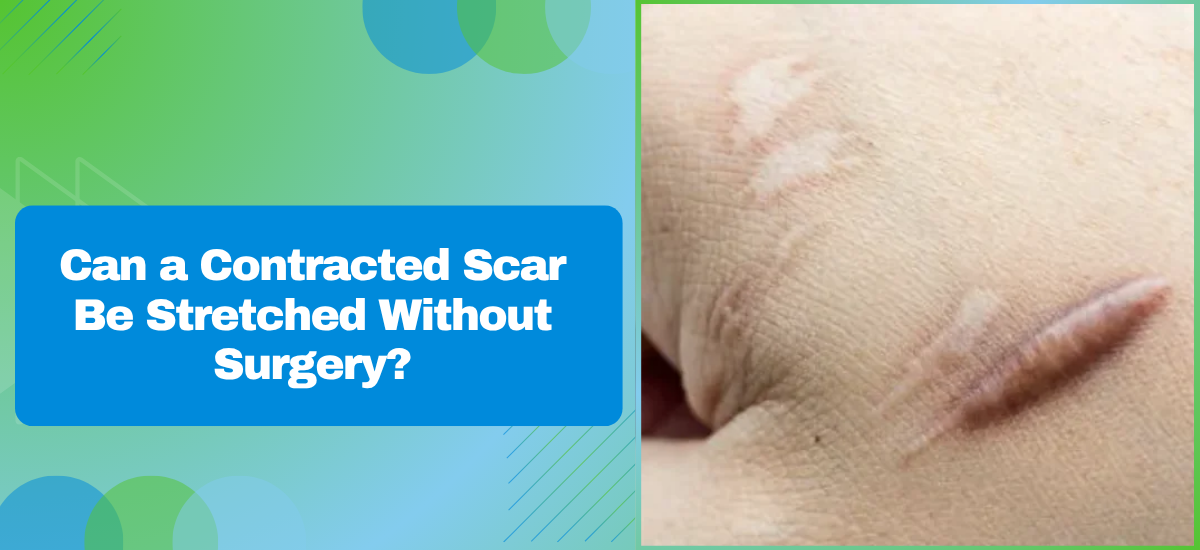
Sometimes, yes. A contracted scar can loosen up without an operation, but only within a certain window. Catch it early, while the tightness is still mild to moderate, and stretching-based care has a real shot. Wait past that window, and the tissue has already set. So the real question isn’t whether non-surgical treatment works. It’s whether you’re still in the timeframe where it can.
According to Dr. Leena Jain, plastic surgeon in Mumbai, “Scars keep changing for months after the wound closes. That’s the window people miss. By the time someone comes in worried about a ‘permanent’ scar, it’s often already past the point where stretching alone would’ve fixed it.”
What Non-Surgical Methods Actually Help Loosen a Contracted Scar?
These work by keeping the tissue mobile while it’s still forming, not after it’s set.
- Physical Therapy: Guided stretching keeps the nearby joint moving through its full range. Skip sessions and the scar tightens right back.
- Custom Splinting: Holds the skin in an elongated position for hours at a time. It’s tedious. It also works, if worn consistently.
- Scar Massage: Manual pressure breaks up early adhesions between skin and deeper tissue. Best started only once the wound has fully closed.
- Silicone and Pressure Therapy: Slows down collagen overproduction and keeps the scar flatter. Not a fix on its own, more of a support act.
None of this reverses a scar that’s already matured into a fixed contracture. For deeper burns or trauma-related tightness, these methods work best alongside proper post-burn deformity and contracture treatment.
When Does a Contracted Scar Need Surgery Instead?
A few signs mean it’s time to stop stretching and start planning a release.
- Joint Movement Is Restricted: The joint physically can’t extend or bend fully anymore. That’s shortened tissue, not just tightness.
- No Progress After Weeks of Therapy: If consistent stretching and splinting aren’t moving the needle, more time won’t either.
- The Scar Has Matured: Older scars have less collagen turnover left to work with. There’s simply less to reshape.
- Daily Function Is Affected: Struggling to grip, turn your neck, or move normally isn’t cosmetic anymore. It’s functional.
Understanding why burn scars tighten in the first place explains why some cases respond to stretching and others simply don’t.
Why Choose Dr. Leena Jain for Contracted Scar Treatment?
Dr. Leena Jain brings over seven years of reconstructive microsurgery experience, with fellowship training from Hanyang University, Seoul, and Ludwig Maximilian University, Munich. She starts every contracted scar case with the same question: is conservative management still realistic here, or has that window closed?
She evaluates scar maturity, joint involvement, and functional loss before recommending anything. Because defaulting straight to surgery isn’t good practice when stretching might still work. And when release surgery is the right call, the goal is restoring movement without trading one problem for another. Call +91 9820991853 to book an appointment.
Notice a scar pulling tighter by the week? Don’t wait to find out if it’s still fixable without surgery.
FAQs
How long is the window for non-surgical scar stretching?
Roughly the first six to twelve months of scar formation.
Does scar massage work on old scars?
Not much. Mature scars respond better to surgical release.
Can splinting alone fix a contracture?
No. It needs therapy and consistent wear alongside it.
Is contracture surgery painful?
Manageable discomfort, far less than living with restricted movement.
Disclaimer: This blog is for educational purposes only. Consult a qualified plastic surgeon to assess whether non-surgical treatment is right for your case.
