
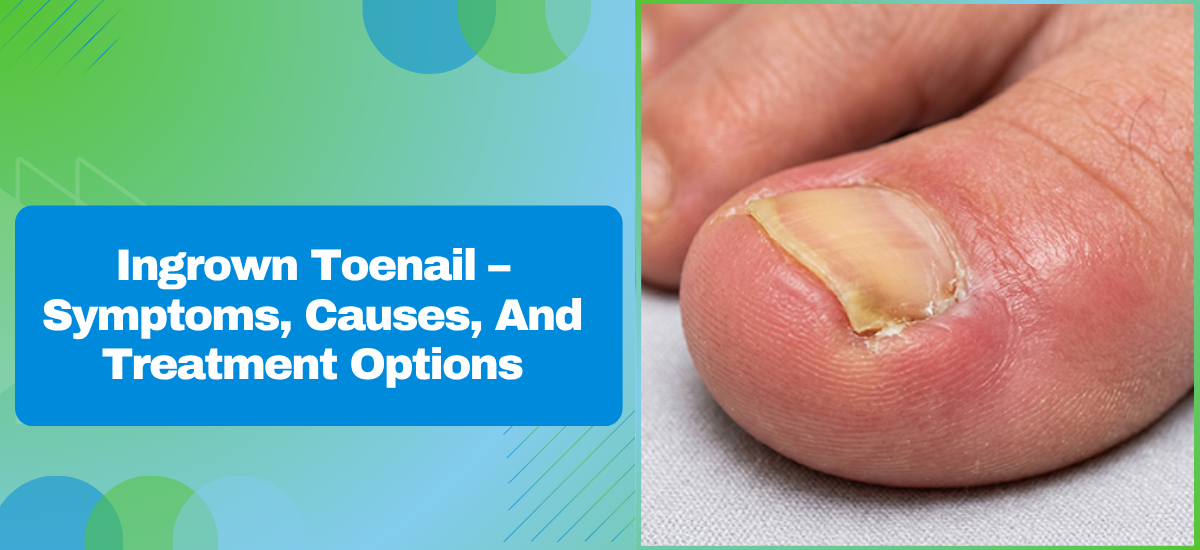
An ingrown toenail is what you get when the nail’s edge decides to grow sideways into the skin next to it, instead of straight out like it’s supposed to. Pain shows up first. Then redness, swelling, and a toe you can’t stop poking at even though it hurts. Tight shoes are usually part of the story. So is cutting nails too short, rounding the corners, or the odd stubbed toe on a doorframe. Most mild cases settle down with warm soaks and a little patience. But once pus shows up, or the redness starts spreading past the nail, soaking it just isn’t going to be enough anymore.
According to Dr. Leena Jain, plastic surgeon in Mumbai, “People wait way too long with these. It feels small, so they soak it for weeks and hope. By the time they actually come in, it’s infected. What could’ve been a ten minute fix now needs a real procedure.”
What Causes an Ingrown Toenail and How Do You Spot One?
The nail itself isn’t really the villain here. It’s the cutting, and whatever’s pressing on it.
- Improper Nail Trimming: Cut too short or rounded at the edges, and skin folds right back over the nail as it grows. Straight across. Every time.
- Tight or Narrow Footwear: Constant pressure pushes the nail fold into the plate. Pointy toe boxes cause more of these than people realize.
- Toe Trauma: A stubbed toe, something heavy dropped on it, or the repeated pounding from running throws off how the nail grows back.
- Natural Nail Curvature: Some people are just built this way. No bad habit involved, purely genetics.
Watch for tenderness along one side, mild swelling, and skin that looks a bit puffed at the edge. Leave it long enough and it can turn into something needing actual plastic surgery and trauma treatment.
When Does an Ingrown Toenail Need Medical Treatment?
Home care works, right up until the point it doesn’t. Here’s roughly where that line sits.
- Visible Pus or Drainage: That’s infection. Plain and simple, and soaking won’t fix it.
- Spreading Redness or Warmth: Moving past the nail fold means things are getting worse, not better.
- Recurring Ingrown Nails: Same edge, same problem, month after month. That’s structural, not bad luck.
- Diabetes or Poor Circulation: What’s minor for most people is genuinely risky here. Don’t sit on this one.
And if you’re catching things early, our piece on how to get rid of an ingrown toenail overnight walks through the practical first moves before things reach this point.
Why Choose Dr. Leena Jain for Ingrown Toenail Treatment?
Dr. Leena Jain brings over seven years of experience in reconstructive and trauma surgery, with fellowship training from Hanyang University, Seoul, and Ludwig Maximilian University, Munich. She deals with what’s flaring up right now. But she’s also paying attention to whatever keeps bringing patients back with the same toe.
For nails that ingrow again and again, she offers procedures that go after the nail fold directly instead of just calming things down for a month or two. Because treating the symptom without touching the cause just means you’re back here again. Call +91 9820991853 once home care has run its course.
Toe been sore and swollen for a few days straight? That’s your sign to stop waiting.
FAQs
Can an ingrown toenail heal on its own?
Often, yes. Warm soaks and proper footwear usually do the job.
Is an ingrown toenail procedure painful?
Not really. Local anesthesia keeps discomfort to a minimum throughout.
Does an infected ingrown toenail need antibiotics?
Usually. Especially once there’s visible pus or spreading redness.
Will the nail grow back after removal of the ingrown edge?
Mostly, yes. Though some procedures are designed to prevent that.
Disclaimer: This blog is for educational purposes only. If your ingrown toenail shows signs of infection or keeps recurring, consult a qualified surgeon rather than continuing home treatment indefinitely.
