
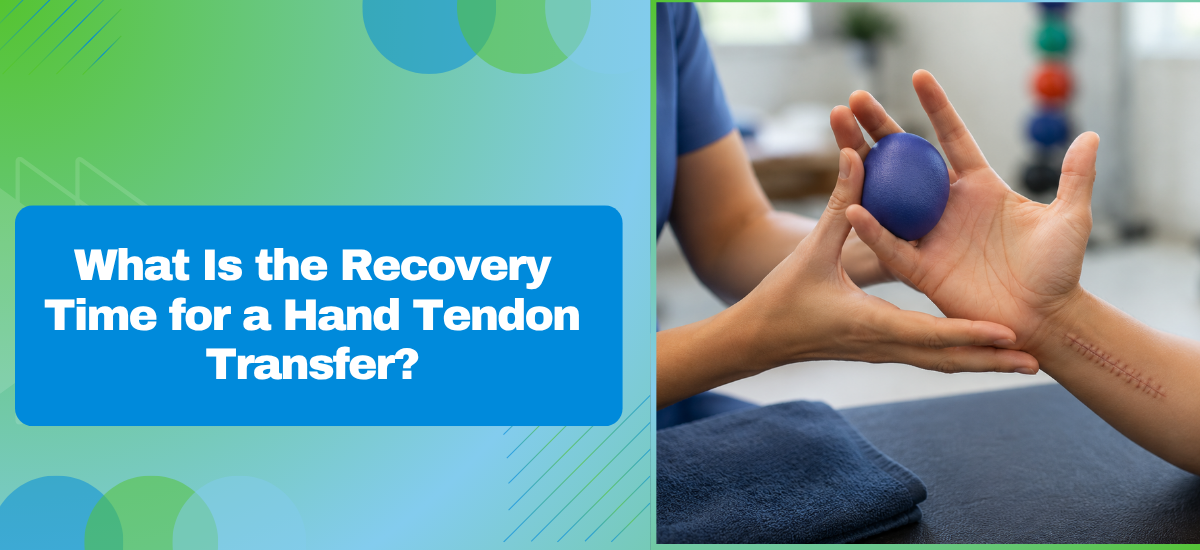
Recovery from a hand tendon transfer takes three to six months in most cases. The first one to two months are about letting the tendon heal in its new position without disrupting the repair. Functional recovery, meaning the ability to use the hand for everyday tasks, typically follows over the next few months. Full strength and range of motion can take six months or longer, depending on the injury, the transfer performed, and how consistently rehabilitation is followed.
According to Dr. Leena Jain, plastic surgeon in Mumbai, “Tendon transfer recovery isn’t just about waiting. The retraining phase is where patients either gain the function they were promised or plateau short of it. Therapy isn’t optional, it’s the second half of the surgery.”
What Does Recovery Actually Look Like Phase by Phase?
Each phase has a different goal. Missing what one phase requires tends to affect the next.
- Weeks 0 to 4, protection phase: The transferred tendon is at its most vulnerable. A splint holds the hand in a position that keeps tension off the repair. Controlled passive movements may begin early under therapist supervision, but nothing that loads the tendon.
- Weeks 4 to 8, early active phase: The splint is gradually adjusted. Active movement begins as the tendon gains enough strength to handle controlled load. This is where therapy becomes daily and structured. Skipping sessions at this stage has a direct cost.
- Weeks 8 to 12, strengthening phase: Resistance is introduced progressively. The transferred tendon starts functioning in its new role, but the brain still needs to learn to activate it differently. Retraining is as much neurological as it is physical.
- Months 3 to 6, functional return: Most patients reach functional hand use by this point. Grip strength and fine motor control continue improving beyond the three-month mark. Some patients take longer, particularly where the nerve supply to the donor muscle was compromised.
So the timeline is a guide, not a guarantee. What consistently matters is how well each phase is managed. For a full overview of what tendon repair and transfer involves surgically, read about tendon repair surgery.
What Can Slow Recovery Down?
Several factors affect how quickly and completely function returns after a tendon transfer.
- Donor muscle strength: The transferred tendon can only perform as well as the muscle driving it. A weak or partially denervated donor muscle limits the functional outcome regardless of how well the surgery went.
- Scar tissue formation: Adhesions between the tendon and surrounding tissue restrict gliding. Therapy helps prevent this, but some patients are more prone to adhesion formation than others.
- Delayed rehabilitation: Starting therapy late or inconsistently is the most common avoidable cause of a poor outcome. The tendon heals, but it heals in a position that doesn’t translate to useful hand function.
- Concurrent nerve injury: If the transfer was done to compensate for nerve loss, sensory and motor recovery adds its own timeline on top of the tendon healing.
And the earlier therapy starts under proper guidance, the better the outcome tends to be. For context on what the early weeks after tendon surgery involve in more detail, read about flexor tendon surgery.
Why Choose Dr. Leena Jain for Hand Tendon Transfer?
Dr. Leena Jain holds an MCh in Plastic Surgery with fellowship training in Microsurgery and Perforator Flaps from Hanyang University, Seoul, and an AO Fellowship in Microsurgery and Maxillofacial Trauma from Ludwig Maximilian University, Munich. Her hand surgery practice includes tendon repairs, transfers, and complex reconstructive cases across trauma and nerve injury presentations.
She approaches tendon transfer with the full recovery in mind, not just the operative result. Patients receive a structured therapy plan from the outset, with clear guidance on what the hand should and shouldn’t do at each stage. Because a well-executed transfer can still produce a poor outcome if the rehabilitation isn’t properly managed. To book a consultation, call +91 9820991853.
Had a tendon transfer or scheduled for one?
FAQs
When can I use my hand normally after a tendon transfer?
Most patients return to everyday hand use between three and four months. Full strength takes longer.
Is physiotherapy mandatory after a tendon transfer?
Yes. Therapy is not optional. It directly determines how much function the transferred tendon delivers.
Can a tendon transfer fail?
It can underperform if the donor muscle is weak, adhesions form, or rehabilitation is inconsistent. Complete failure is uncommon with proper surgical technique.
How long is the splint worn after surgery?
Typically six to eight weeks, though the position and type of splint changes as healing progresses.
Disclaimer: This blog is for educational purposes only. If you have had a tendon transfer or are experiencing loss of hand function, consult a qualified hand surgeon to understand your recovery plan and what to expect at each stage.
