
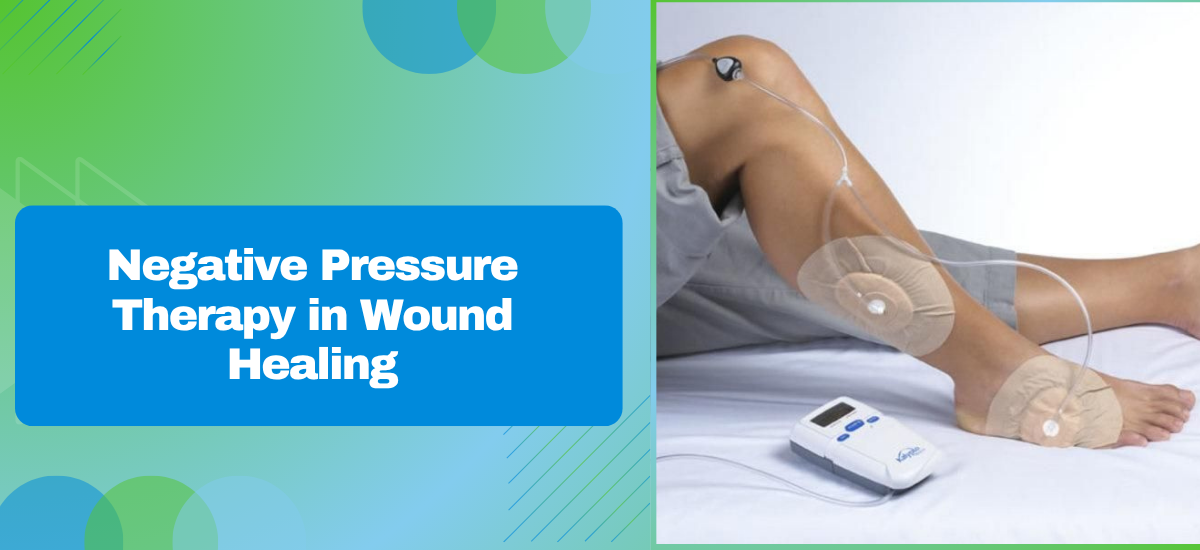
Negative pressure therapy supports wound healing by applying controlled suction to a wound through a sealed dressing, which removes excess fluid, reduces swelling, improves blood flow to the tissue, and draws the wound edges together. It’s used for complex, non-healing, or large wounds where standard dressings aren’t enough. The role of the therapy rests on two things. What it does to the wound environment. And when it’s the right tool for the situation.
According to Dr. Leena Jain,best plastic surgeon in Mumbai,Negative pressure therapy changes a wound’s local environment in ways that simple dressings can’t, which is why it has become a standard tool in complex wound care.
How Does Negative Pressure Therapy Help Wound Healing?
The therapy works by changing the local conditions inside and around the wound. These are the main mechanisms.
Fluid removal Controlled suction draws out exudate and reduces tissue swelling, which lets cells move more freely and improves the conditions for healing.
Improved blood flow. The vacuum effect pulls more blood into the surrounding tissue, delivering oxygen and nutrients to cells that need them for repair.
Wound contraction Gentle, sustained pressure pulls the wound edges closer together, helping the wound become smaller and more manageable over time.
Bacterial reduction Removing fluid where bacteria thrive lowers the bacterial load, which supports the body’s own infection control alongside antibiotics.
The therapy doesn’t replace surgery or antibiotics. What is clear is that it creates conditions in which wounds that were stuck can start moving toward closure again.
For complex diabetic and non-healing wounds where this therapy is often used, this connects with Diabetic Ulcer Treatment.
When Is Negative Pressure Therapy Used?
Negative pressure therapy suits specific wound types and stages of treatment. These are the main situations.
Large or complex wounds Wounds with significant tissue loss, irregular shapes, or exposed structures benefit from the contraction and conditioning effect.
After debridement. Following surgical removal of dead tissue, negative pressure prepares the wound bed for later closure with grafts, flaps, or direct suturing.
Diabetic foot ulcers Chronic ulcers that aren’t progressing with standard care often respond well, particularly once infection and circulation issues are addressed.
Skin graft and flap support Applied over fresh skin grafts or under flap reconstructions, it improves graft take and reduces fluid build-up.
The therapy isn’t right for every wound. Active bleeding, untreated infection, or exposed major vessels are reasons not to use it. For an example of how complex wound care addresses chronic infection, read sternal wound infection.
Why Choose Dr. Leena Jain?
Dr. Leena Jain is a Plastic, Reconstructive and Microsurgeon. She holds an MCh in Plastic Surgery and a Fellowship in Microsurgery and Perforator Flaps from Hanyang University, Seoul, with over 7 years across reconstructive work for complex and non-healing wounds.
Patients with stalled or complex wounds have had negative pressure therapy integrated into staged reconstruction under her care, with each step chosen for what the wound actually needs. She uses the therapy when it genuinely helps rather than as a default.
Living with a wound that won’t close despite weeks of dressings?
FAQs
What is negative pressure wound therapy?
A treatment that applies controlled suction to a wound through a sealed dressing to support healing.
How long does negative pressure therapy last?
Usually days to weeks, depending on wound size, response, and the next surgical step planned.
Is negative pressure therapy painful?
Most patients tolerate it well, with mild discomfort possible during dressing changes.
When isn't negative pressure therapy used?
Active bleeding, untreated infection, exposed major vessels, or malignant tissue in the wound.
