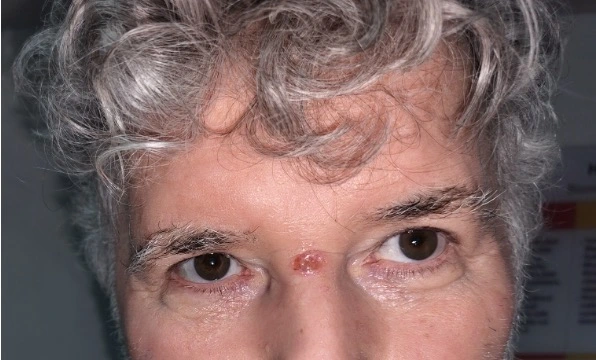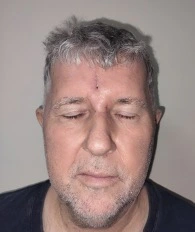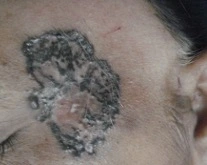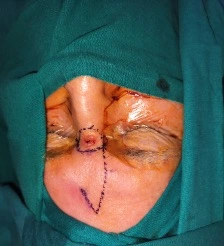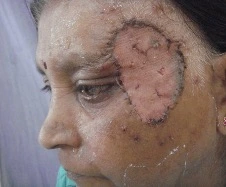
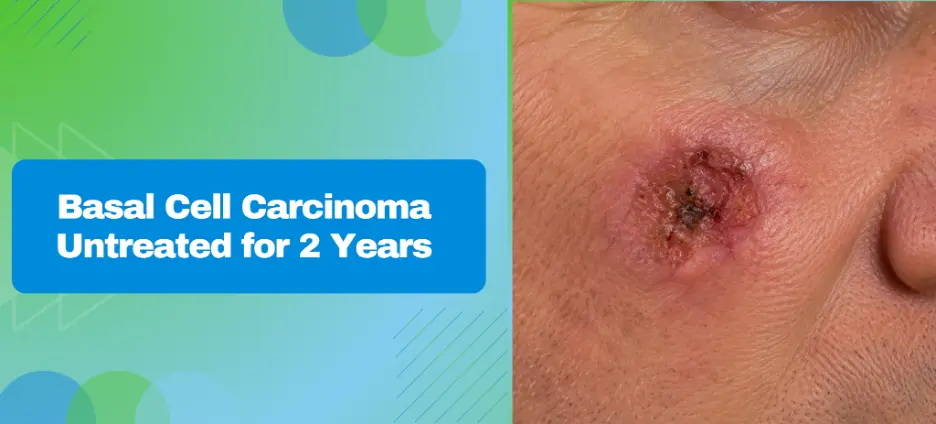
Basal cell carcinoma is the most common form of skin cancer, yet it is also the one most frequently dismissed. A small pearly bump, a patch that bleeds and heals repeatedly, a sore that simply will not close, these are easy to ignore for months, sometimes years. When basal cell carcinoma goes untreated for two years or more, it stops being a minor skin concern and starts becoming a serious reconstructive problem.
BCC begins in the basal cells of the skin and often appears as a small shiny bump or a patch that refuses to heal. While it rarely spreads to distant organs, untreated cases invade deeper tissues, causing disfigurement, functional loss, and significant complications.
Dr. Leena Jain, a leading Plastic Surgeon in Mumbai, says:
“Two years of unchecked growth means the tumour has had time to extend far beyond its visible borders. Reconstruction after advanced BCC requires flaps and sometimes even microsurgical precision and careful planning to restore both function and appearance.”
But what exactly happens when BCC is left alone for two years? Let’s break it down.
What Happens if BCC Is Left Untreated for 2 Years?
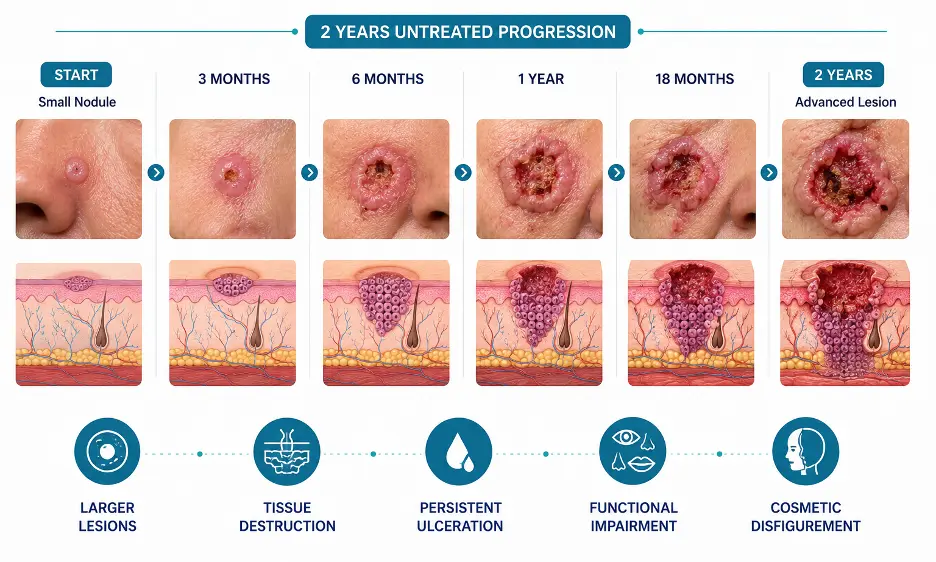
Leaving basal cell carcinoma untreated for two years allows the tumour to grow steadily — both outward across the skin surface and downward into deeper tissue. That slow growth should never be mistaken for harmlessness.
Two years is a critical turning point. Patients who do not act at this stage often continue to delay, eventually presenting with far greater destruction, as seen in cases of basal cell carcinoma untreated for 5 years, where tissue loss and reconstructive complexity increase significantly with every passing year.
Over two untreated years, the following changes are commonly seen:
Larger Lesions:
A small nodule grows into a noticeable ulcerated patch with rolled, pearly edges.
Tissue Destruction:
BCC gradually destroys surrounding skin, subcutaneous fat, and in some locations, cartilage or bone beneath.
Persistent Ulceration:
Wounds that bleed intermittently and crust repeatedly without ever fully closing.
Functional Impairment:
Near the eye, nose, or mouth, the tumour may already be encroaching on structures affecting vision, breathing, or eating.
Cosmetic Disfigurement:
Visible growth over two years causes noticeable facial asymmetry and emotional distress.
Dr. Leena Jain, a skilled reconstructive surgeon in Mumbai, notes:
“What patients see on the surface rarely reflects how far the tumour has actually traveled. Two years is enough time for BCC to reach cartilage, nerve, or bone in certain facial locations.”
Noticing a skin lesion that has not healed for months? Book a consultation with Dr. Jain
Which Types of Basal Cell Carcinoma Are Most Dangerous When Neglected?
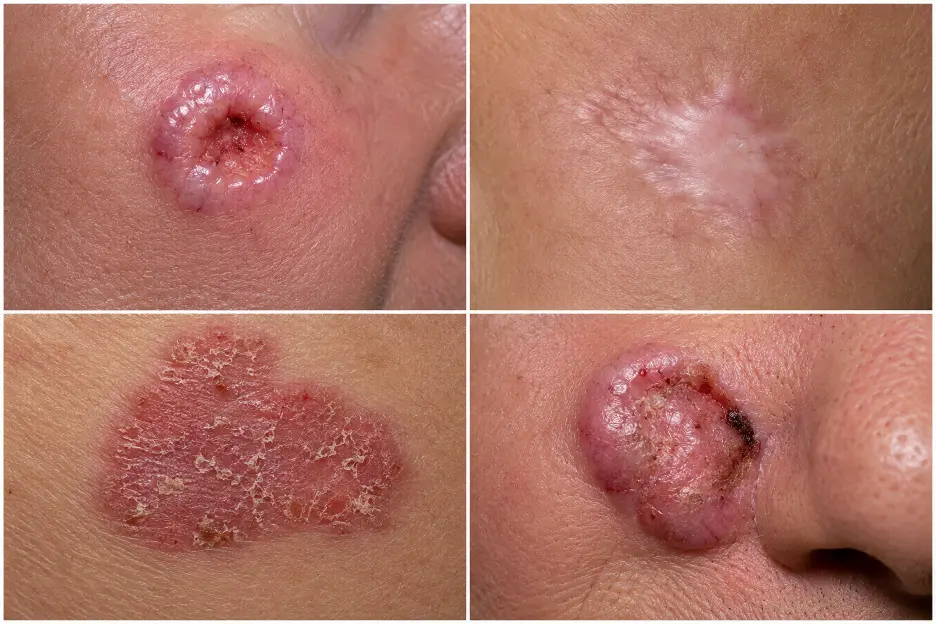
Not all BCC subtypes behave the same way. Understanding subtype behaviour matters as much as the timeline just as squamous cell skin cancer follows its own distinct invasion pattern, each BCC subtype carries its own risk profile when neglected.
Nodular BCC:
The most common subtype. After two years it typically presents with a central crater, rolled edges, and deeper penetration than its surface suggests.
Morphoeic (Sclerosing) BCC:
Infiltrates tissue without a clear border, spreads along nerve sheaths, and is notoriously difficult to excise completely. It can look like an innocuous scar-like patch even as it tracks deep.
Superficial BCC:
Slower to invade deeply, but two years of growth can expand it to a large surface area, making reconstruction more complex.
Basosquamous Carcinoma:
A mixed variant combining BCC and squamous cell features. It carries a higher risk of regional spread and requires wider excision margins — making two years of untreated growth particularly concerning.
The subtype is not always obvious without a biopsy. Specialist assessment, not a visual guess, determines the correct treatment plan.
Treatment Options Available for Basal Cell Carcinoma
Basal cell carcinoma is highly treatable even at the two-year mark. The reconstruction required after excision is often the central challenge at this stage, with surgical principles closely mirroring those used in free flap reconstruction for head and neck cancer where restoring form and function after wide excision defines the goal.
Wide Local Excision:
The tumour is removed with a margin of healthy tissue. After two years, this margin is wider, the defect larger, and direct closure is often not possible.
Mohs Micrographic Surgery:
Staged excision with real-time margin checking under the microscope. Ideal for sensitive facial areas where tissue preservation is critical.
Reconstructive Surgery for Large Defects:
Local flaps or skin grafts are used to close defects too large for direct repair. Anatomical landmarks can get involved like like around corners of the eye or corners of the mouth where preserving these landmarks is important while getting adequate and clear tumour free margin.
Free Flap Reconstruction:
For large, deep and three-dimensional defects, microsurgical tissue transfer from a donor site restores both structure and appearance.
Radiation Therapy:
Used when surgery is not possible, particularly in older patients.
Dr. Leena Jain explains:
“Reconstruction after advanced BCC is not just about closing a wound. It is about restoring the patient’s face, function, and confidence. That requires both oncological precision and reconstructive artistry.”
Potential Complications of Delayed Treatment
When treatment is delayed beyond two years, complications grow more difficult to address with every passing month. Patients who continue to delay often face the severe destruction documented in cases of basal cell carcinoma untreated for 10 years.
Deep Tissue Damage:
Invasion progresses into cartilage, muscle, or bone.
Loss of Function:
Tumours near the eye, nose, or mouth compromise vital functions as they expand.
Reconstructive Complexity:
Larger cancers require far more extensive procedures than simple early excision would have needed. Patients with concurrent chronic skin conditions can read how Dr. Jain approaches hidradenitis suppurativa treatment for related soft tissue concerns.
Higher Recurrence Rates:
Larger, deeper tumours with subclinical extensions are harder to clear completely, raising recurrence risk.
Emotional Strain:
Visible disfigurement and prolonged recovery significantly affect confidence and quality of life.
Dr. Leena Jain shares:
“Every delay allows basal cell carcinoma to grow stronger roots. Addressing it at two years rather than five or ten makes an enormous difference to what reconstruction is required and what the final outcome looks like.”
Worried your lesion has been present too long? Consult a plastic surgeon now.
Importance of Early Diagnosis and Intervention
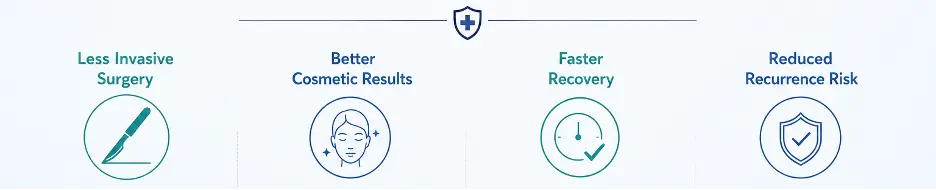
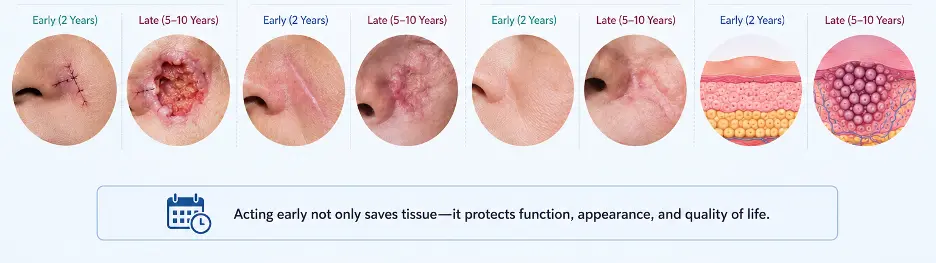
Even at the two-year mark, acting now rather than delaying further makes a significant clinical difference. The same reconstructive principles used in post-burn deformity treatment become necessary when BCC has been allowed to destroy tissue for years, a level of complexity that earlier action avoids entirely.
Less Invasive Surgery:
Acting at two years means smaller excision margins and simpler closure than at five or ten.
Better Cosmetic Results:
Smaller defects produce smaller scars and preserve more facial structure.
Faster Recovery:
Healing is smoother when the cancer has not yet reached deep structures.
Reduced Recurrence Risk:
Early excision with clear margins lowers the risk of the cancer returning in a more aggressive form.
Dr. Leena Jain advises:
“Patients who act at two years rather than waiting further almost always face less complex reconstruction and recover with far less disruption to their lives.”
Should You See a Plastic and Reconstructive Surgeon Now?
At the two-year mark, this is not a question of whether to seek treatment, it is a question of who is best placed to deliver it. Consider seeking urgent specialist evaluation if any of the following describe your situation:
- A skin lesion has been present for more than one year and has not healed, has bled, or has changed in size or shape
- The lesion sits on a sensitive area such as the nose, eyelid, ear, lip, or temple
- You have previously been told it is basal cell carcinoma but have not proceeded with treatment
- The lesion is now ulcerated, crusted, or noticeably larger than when first noticed
- You have a history of significant sun exposure, fair skin, or previous skin cancers
A Plastic and Reconstructive surgeon assesses the tumour, plans excision margins, and designs the reconstruction simultaneously, treating the cancer and restoring appearance as a single coordinated process.
Dr. Leena Jain is a Plastic Reconstructive Microsurgeon and Hand Surgeon with over 10 years of specialised surgical experience at Lilavati Hospital, Bandra, Jaslok Hospital, Raheja Hospital and her clinic in Borivali. Her training in microsurgery, free flap reconstruction, and complex soft tissue repair makes her exceptionally well placed to manage advanced basal cell carcinoma where reconstruction is the primary challenge. She provides honest assessments, realistic expectations, and surgical plans designed around each patient’s face, function, and life.
Conclusion
Basal cell carcinoma may not behave like the aggressive cancers we often hear about, but leaving it unchecked for two years can be life-changing in its own way. The good news is that even at this stage, BCC remains one of the most treatable forms of cancer when placed in the right surgical hands. The choice to act today can spare you years of increasingly difficult and complex management.
Worried about a skin lesion that has been present and growing for too long? Schedule a consultation with Dr. Leena Jain, a leading plastic surgeon in Mumbai, for expert evaluation and a clear treatment plan.
FAQs
1. Can basal cell carcinoma be cured after 2 years of being untreated?
Yes. Even advanced BCC is treatable, though larger defects require more complex reconstruction. The sooner treatment begins, the simpler the surgery.
2. Does basal cell carcinoma spread to other organs if left untreated?
Rarely. BCC primarily causes local destruction. However, metastatic spread is possible in very long-standing neglected cases.
3. What does untreated basal cell carcinoma look like after 2 years?
Typically larger, ulcerated, crusted, or raised with irregular rolled borders — and may bleed intermittently.
4. How long does recovery take after removing a large basal cell carcinoma
Surgery is usually completed in one session. Recovery depends on reconstruction complexity and takes 2 to 6 weeks.
5. Can basal cell carcinoma return after treatment?
Yes, recurrence is possible, especially after delayed treatment. Regular skin checks for at least five years significantly reduce this risk.
Real-Time Images