
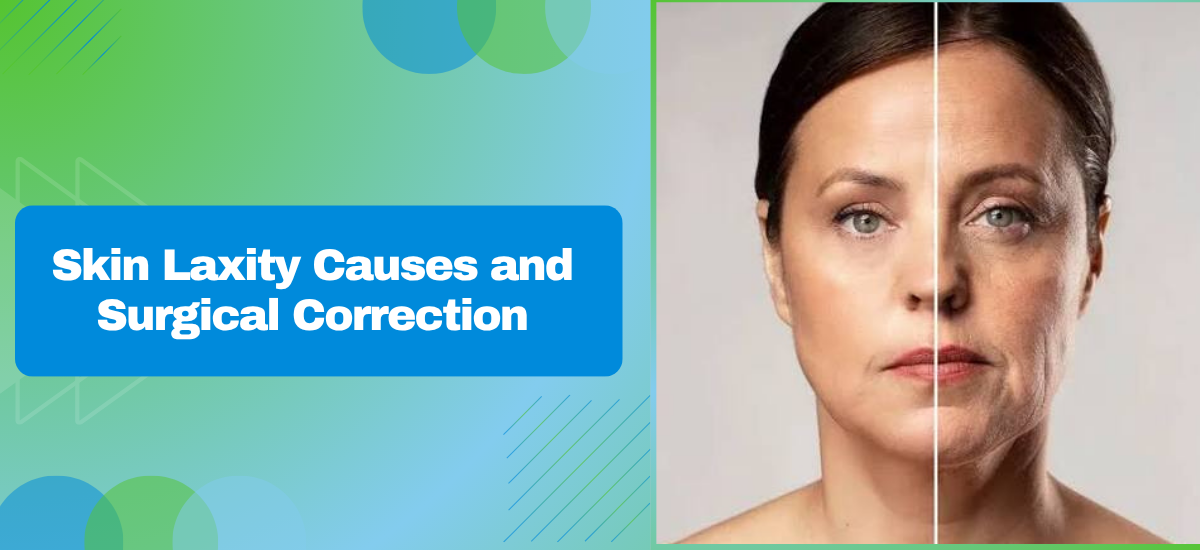
Skin laxity is caused by gradual loss of collagen and elastin from aging, sun damage, significant weight loss, pregnancy, and genetic factors, all of which reduce the skin’s ability to spring back into shape. Surgical correction removes the excess skin and tightens what remains, restoring contour where creams and exercise can’t reach. The picture rests on two things. Why the skin loses its support. And what surgery does to restore a firmer shape.
According to Dr. Leena Jain, plastic surgeon in Mumbai,Loose skin doesn’t tighten on its own once collagen support is gone, so surgical removal is what reliably restores the contour patients want.
What Causes Skin Laxity?
Skin laxity develops when the structural proteins that keep skin firm break down faster than the body can replace them. These are the main contributors.
Aging Collagen and elastin production slow with age, so the skin gradually loses the elasticity that lets it stay tight against underlying tissue.
Sun damage. UV exposure breaks down collagen and damages elastin fibres in the dermis, accelerating the loss of skin firmness well before age alone would.
Weight loss Significant or rapid weight reduction leaves skin that was stretched without time to retract, particularly in the abdomen, arms, and thighs.
Pregnancy Pregnancy stretches abdominal skin and weakens the supporting layers, often leaving laxity that exercise alone can’t reverse.
The exact pattern varies between people. What is clear is that once skin has lost its supporting framework, no topical treatment restores it. The body has to be helped to a tighter contour through surgical removal.
For abdominal laxity needing surgical correction, this connects with Tummy Tuck Surgery.
How Is Skin Laxity Surgically Corrected?
Surgical correction matches the technique to the area and the amount of excess skin. These are the main approaches.
Abdominoplasty Removes excess abdominal skin and tightens the underlying muscles, used for laxity after pregnancy or significant weight loss.
Brachioplasty. Arm lift surgery removes loose skin from the upper arms, used when significant laxity remains after weight loss or with aging.
Thigh lift Removes excess skin from the inner or outer thighs through carefully placed incisions, often after major weight loss.
Body lift A combined procedure addressing skin laxity across the abdomen, hips, and thighs in one operation, used for more extensive cases.
The choice depends on which area is affected and how much skin needs to come off. Recovery and scar placement are key parts of the planning. For a related procedure with a different recovery pattern, read 1 week after liposuction.
Why Choose Dr. Leena Jain?
Dr. Leena Jain is a Plastic, Reconstructive and Microsurgeon. She holds an MCh in Plastic Surgery and a Fellowship in Microsurgery and Perforator Flaps from Hanyang University, Seoul, with over 7 years across body contouring and reconstructive surgery.
Patients with loose skin after pregnancy, major weight loss, or aging have regained a firmer contour under her care, with scar placement and recovery planned around each patient’s body and lifestyle. Each procedure is matched to what actually needs correcting rather than a default.
Living with loose skin after weight loss, pregnancy, or aging?
FAQs
Can creams reverse skin laxity?
No, creams can improve surface appearance but don’t restore lost collagen support.
Will exercise tighten loose skin?
Exercise builds underlying muscle but doesn’t tighten skin once its elasticity is gone.
How long is recovery after skin tightening surgery?
Several weeks for initial recovery, with scars maturing and contour settling over months.
Are skin tightening results permanent?
Largely yes, though aging and weight changes continue to affect the skin over time.
