
The Achilles tendon connects your calf muscles to your heel bone and powers every step, jump, and push-off. When it is overloaded or already weakened, it can give warning signals before it tears completely. Recognising these early signs can prevent a sudden, painful rupture that often needs surgery.
A rupture does not always announce itself loudly. Sometimes the only clue is a tendon that no longer feels reliable. Knowing what to look for helps you respond before a small problem becomes a complete tear.
The cost of ignoring these signs is high. A complete Achilles rupture can keep you off your feet for months and often needs surgery followed by long rehabilitation. Spotting the trouble early, while the tendon is only strained or partially damaged, gives you far better options and a quicker recovery.
Dr. Leena Jain, a leading plastic surgeon in Mumbai, shares, “An Achilles tendon rarely ruptures without warning. Pain, swelling, and weakness in the back of the heel are signals patients often ignore. Catching these early can be the difference between simple rehabilitation and major surgery.”
Your heel has been aching for weeks. Is it just soreness or is your tendon about to give way?
Why Does the Achilles Tendon Rupture?
The Achilles is the largest, strongest tendon in the body, yet it has a relatively poor blood supply a few centimetres above the heel. That zone is where most ruptures happen. Repeated strain, sudden force, or gradual wear can push an already weakened tendon past its limit.
Tendons that are overused rarely fail all at once. Tiny tears build up, the fibres weaken, and one forceful movement finishes the job. This is why warning signs usually appear before the tendon snaps.
The classic moment of rupture is sudden and forceful — a sprint, a jump, or a quick change of direction. Sports like badminton, tennis, cricket, and football are common triggers, particularly in people who train hard occasionally rather than regularly. The tendon simply cannot absorb the explosive load demanded of it.
Age and lifestyle matter too. As we get older, tendons lose some of their elasticity and blood flow, making them more brittle. A long break from activity followed by an intense session is one of the riskiest patterns of all, which is why weekend athletes are so often affected.
Damage can range from minor inflammation to a partial tear that needs review by a tendon repair specialist.
Noticing heel pain, stiffness, or weakness that won’t settle? Get expert assessment before a strained Achilles tendon turns into a full rupture.
So what exactly does a tendon in trouble feel like — and how do you know when it’s serious?
Early Warning Signs You Should Not Ignore
Most people who rupture their Achilles look back and realise the tendon had been complaining for a while. These are the signals that suggest it may be close to failing.
Persistent Pain at the Back of the Heel
A dull ache or sharp pain a few centimetres above the heel, especially in the morning or after activity, is a classic early sign. It may ease with movement but returns afterwards. Pain that lingers for weeks points to a tendon under real strain. Many patients describe it as a deep soreness that they keep working through which is exactly what allows the damage to build.
Stiffness and Tightness in the Tendon
A tendon that feels tight, stiff, or thickened, particularly first thing in the day, suggests chronic irritation. You may feel a lump or a tender, swollen patch along the tendon. This is a sign the tissue is struggling to repair itself and the damage is accumulating beneath the surface.
Weakness When Pushing Off
Difficulty rising onto your toes, climbing stairs, or pushing off while walking signals weakening fibres. The leg may feel like it lacks power. A noticeable drop in calf strength is a warning the tendon can no longer take normal load. You might also start favouring the other leg without realising it, which then strains nearby muscles and joints.
A Cracking or Snapping Sensation
Some people feel small clicks, crackling, or a giving-way sensation during movement just before a rupture. If you ever feel a sudden snap as if kicked in the back of the leg, treat it as an emergency. Severe cases involving surrounding soft tissue may also need limb reconstruction to restore full lower limb function.
If any of these signs describe what you are currently experiencing, do not wait for things to worsen. Seek specialist evaluation now.
Dr. Leena Jain adds, “The patients who avoid surgery are almost always those who came in when pain and stiffness were their only symptoms. Once the tendon snaps, the treatment path becomes significantly more complex and recovery far longer.”
Unsure whether your heel pain is harmless or a tendon at risk? Consult Dr. Leena Jain, an experienced plastic surgeon in Mumbai, for a proper evaluation.
Not sure which of these signs apply to you — or what your risk level actually is?
What Raises Your Risk of Rupture?
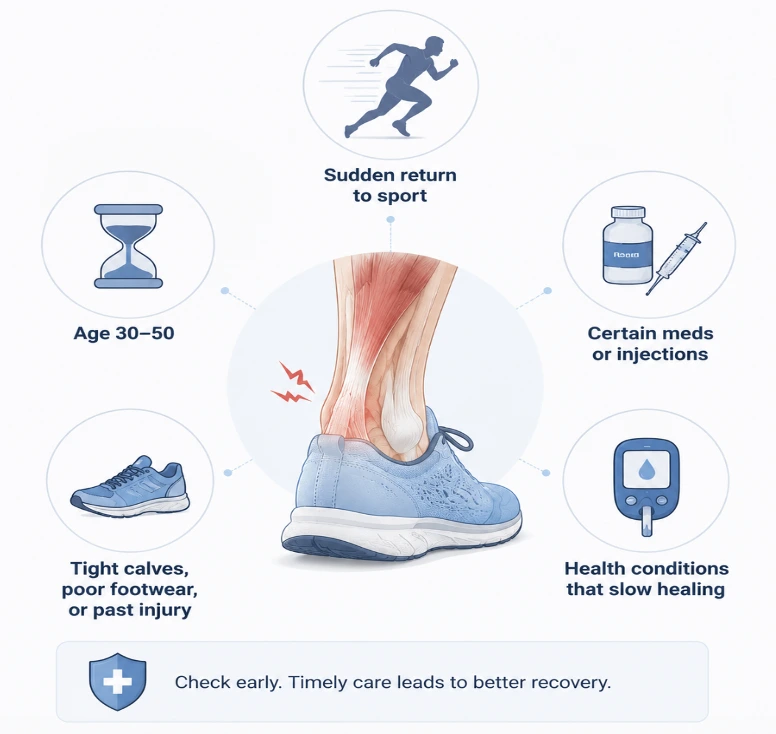
Certain factors make the Achilles tendon far more likely to give way. Knowing them helps you stay alert if any apply to you.
- Sudden return to sport after time off, especially running or jumping
- Age between 30 and 50, when tendon elasticity starts to decline
- Certain antibiotics and steroid injections that weaken tendon tissue
- Tight calf muscles, poor footwear, or a previous Achilles injury
- Conditions affecting healing, such as diabetes
If a tendon does tear, prompt surgical assessment matters. Complex injuries occurring alongside significant trauma may involve plastic surgery and trauma care when surrounding soft tissue is also damaged.
How Is a Threatened or Torn Achilles Diagnosed?
A correct diagnosis early shapes every decision that follows — from whether surgery is needed to how long recovery will take. Here is how a specialist assesses the tendon:
- Physical examination first: A specialist checks for swelling, gaps in the tendon, and how well the foot responds when the calf is gently squeezed. This simple bedside test quickly reveals whether the tendon is still intact or has torn.
- Ultrasound for real-time assessment: Ultrasound shows the tendon moving in real time and highlights partial tears that may not yet have caused a complete rupture. It is fast, accessible, and highly informative in experienced hands.
- MRI for detailed mapping: An MRI scan maps the exact location and severity of the damage, helping the surgeon decide whether rest and rehabilitation will be enough or whether surgical repair is the safer and more reliable path.
- Early diagnosis changes outcomes: The sooner a weakened tendon is assessed, the more likely it is that simpler treatment will succeed. Waiting until the pain becomes unbearable almost always makes the injury harder to manage.
- Underlying conditions need special attention: Patients with conditions that slow tissue healing such as diabetes, benefit especially from early review. Managing overall health through proper diabetic ulcer care is an important part of planning safe surgical outcomes in such cases.
What Should You Do If You Notice These Signs?
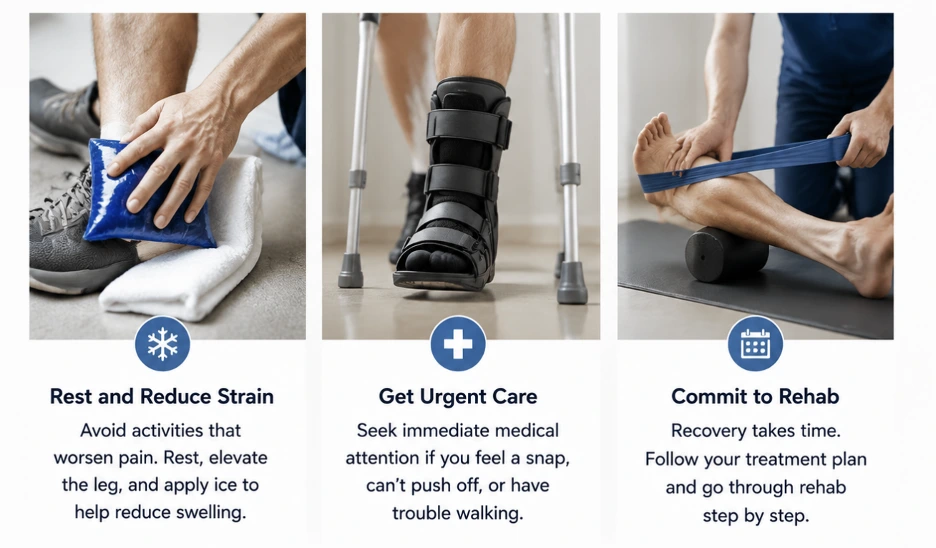
Do not push through worsening Achilles pain. The right steps taken early can prevent a partial problem from becoming a complete rupture. Here is what to do:
- Rest the leg immediately: Stop any activity that loads the tendon. Avoid running, jumping, or climbing stairs until the pain has been properly assessed by a specialist.
- Apply ice to reduce swelling: Ice the affected area for 15 to 20 minutes several times a day. Keep the leg elevated where possible to manage inflammation in the early days.
- Seek urgent care after a sudden snap: If you feel or hear a pop at the back of the ankle and cannot push off the foot or walk normally, treat it as an emergency and get to a specialist as soon as possible.
- Do not delay professional review: Persistent or worsening pain, swelling, or weakness that does not settle with rest needs clinical assessment. The first days after a rupture are the best window for repair, and early diagnosis improves the success of both non-surgical and surgical treatment.
- Understand your recovery timeline: Recovery after surgery is a long and carefully staged process. Understanding what to expect at each milestone including what life looks like at 4 months after Achilles tendon surgery helps patients set realistic goals and stay motivated through rehabilitation without rushing back too soon.
Are you at the point where rest and ice are no longer enough — and professional care is the only sensible next step?
Should You See a Plastic and Reconstructive Surgeon?

At the stage where pain, stiffness, or weakness are persisting despite rest, it is time to get a specialised evaluation. Consider seeing a surgeon if any of the following describe your situation:
- Heel or Achilles pain has not improved after two or more weeks of rest
- You feel or have felt a sudden popping or snapping sensation at the back of the ankle
- There is visible swelling, thickening, or a tender lump along the tendon
- You are unable to rise onto your toes or push off the foot normally
- Pain returns more intensely after every activity session despite trying to manage it
A Plastic and Reconstructive surgeon is trained to assess tendon integrity, surrounding soft tissue, and functional capacity together. They can arrange imaging, map the exact damage, and recommend a treatment path that matches your injury, your profession, and your recovery goals not a generic protocol.
Dr. Leena Jain, a highly experienced plastic surgeon in Mumbai, specialises in tendon repair surgery, soft tissue reconstruction, and microsurgery with a strong focus on restoring full functional strength. Practicing at Lilavati Hospital, Bandra and her clinic in Borivali, she offers patients across Western Mumbai honest surgical advice and careful follow-up at every stage of recovery. Consult Dr. Leena Jain today
Struggling with a painful or weakening Achilles tendon? Schedule a consultation with Dr. Leena Jain, a leading plastic surgeon in Mumbai, for a treatment plan tailored to your injury.
FAQs
1: Can an Achilles tendon rupture be prevented?
Often yes. Acting early on pain, stretching properly, and avoiding sudden overload greatly lowers the risk of a full rupture.
2: Does a rupturing Achilles tendon always hurt?
Usually. Most people feel sharp pain or a snapping sensation, though some chronic cases cause only weakness and stiffness.
3: How do I know if it is strained or torn?
Strains cause pain and stiffness. A tear often brings sudden snapping, severe weakness, and trouble pushing off the foot.
4: Should I keep exercising with Achilles pain?
No. Continuing to load a painful tendon raises rupture risk. Rest it and get assessed before returning to activity.
5: When should I see a doctor for Achilles pain?
See a doctor if pain persists, the tendon feels weak or swollen, or you feel any sudden snap during movement.
