
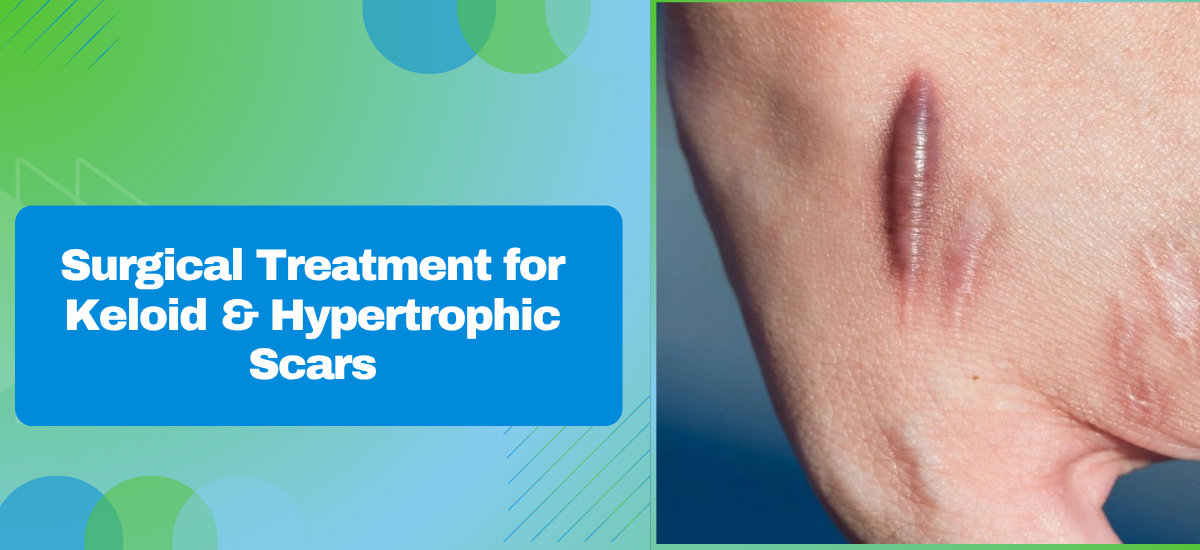
Keloid and hypertrophic scars can be surgically treated, but surgery alone often isn’t enough because both scar types tend to recur, particularly keloids. Treatment usually combines excision with injections, pressure therapy, silicone sheets, or radiation to reduce the chance of return. Because the two scar types behave differently, the picture splits two ways. How they form and why they thicken. And what surgery, combined with other measures, can realistically deliver.
According to Dr. Leena Jain,best plastic surgeon in Mumbai,Surgery alone for a keloid often brings the scar back larger, so the operation has to be paired with measures that suppress the recurrence.
What Causes Keloid and Hypertrophic Scars?
Both scar types develop when the body produces too much collagen during healing, but the patterns differ. These are the main contributors.
Excess collagen production Deep dermal injury triggers an exaggerated healing response, with collagen laid down in disorganised bundles that thicken and raise the scar.
Genetic tendency. Some people are genetically prone to keloid formation, particularly those with darker skin types or a family history of similar scars.
Wound location Areas with high tension or movement, like the chest, shoulders, and earlobes, are more likely to form raised scars after injury or piercing.
Healing duration Wounds that take longer to heal, become infected, or face repeated trauma during healing are more likely to scar abnormally.
The exact trigger varies between cases. What is clear is that keloids extend beyond the original wound boundary while hypertrophic scars stay within it, which is the most useful distinction in deciding treatment.
For scarring affecting movement and joint function, this connects with Neck Contracture Post Burns.
How Is Surgical Treatment Performed?
Surgical treatment for raised scars combines excision with measures to prevent recurrence. These are the main approaches.
Surgical excision The scar is removed and the wound closed carefully to reduce tension. Used alone, recurrence rates are high, especially for keloids.
Steroid injections. Triamcinolone injections into and around the scar, before or after surgery, reduce the inflammatory response that drives keloid formation.
Pressure therapy Pressure garments or silicone sheets worn over the healing scar for months after surgery help flatten and soften the new scar.
Radiation therapy Low-dose radiation soon after keloid excision lowers recurrence rates significantly, used selectively in resistant or large keloids.
No single approach prevents recurrence reliably on its own. Combining excision with adjunctive therapy gives the best chance of a lasting result, particularly for keloids. For an example of how scar tissue settles over time after grafting, read skin graft after 1 year.
Why Choose Dr. Leena Jain?
Dr. Leena Jain is a Plastic, Reconstructive and Microsurgeon. She holds an MCh in Plastic Surgery and a Fellowship in Microsurgery and Perforator Flaps from Hanyang University, Seoul, with over 7 years across scar management and reconstructive microsurgery.Patients with recurrent or disfiguring scars have had them treated with combined excision and adjunctive therapy under her care, with attention to recurrence risk and patient expectations. Each plan is built around the scar type rather than a default technique.
Living with a raised, itchy, or growing scar that won’t settle?
FAQs
What is the difference between a keloid and a hypertrophic scar?
Hypertrophic scars stay within the wound boundary, while keloids extend beyond it.
Will surgery alone cure a keloid?
Often not, since keloids tend to recur after surgery unless combined with other treatments.
How long does scar treatment take?
Several months, with combined therapy continuing well after the initial surgery.
Are keloids dangerous?
Not medically, but they can itch, hurt, restrict movement, or cause significant cosmetic concern.
