
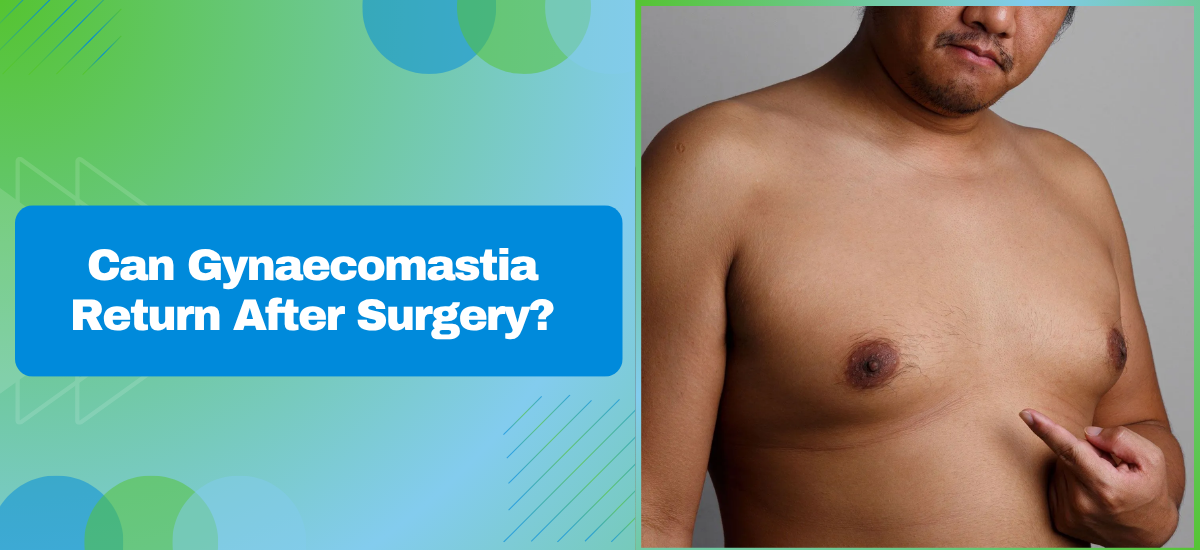
True recurrence after gynecomastia surgery is rare when the glandular tissue gets fully removed. But what many patients call a “return” often has a different explanation — residual gland left behind, weight gained post-surgery, or a hormonal trigger that was never addressed in the first place. That distinction matters because the cause changes what needs to happen next. Not every case of returning chest fullness means the surgery didn’t work.
According to Dr. Leena Jain, plastic surgeon in Mumbai, “Gynecomastia coming back after proper excision is rare. What I see more often is incomplete removal or lifestyle factors reactivating the tissue. Surgery fixes the structural problem. What happens after is largely in the patient’s hands.”
What Actually Causes Gynaecomastia to Come Back?
Recurrence doesn’t always mean the surgery went wrong. Most cases trace back to something specific.
- Residual glandular tissue: If some gland tissue was left behind during the first surgery, it can respond to hormonal shifts and grow again. This is the most direct surgical reason patients return.
- Weight gain: Fat deposits in the chest can recreate the look of gynecomastia without any true glandular regrowth. So what feels like recurrence is sometimes just a body composition change.
- Hormonal triggers: A testosterone-to-oestrogen imbalance, anabolic steroid use, certain medications, or an unresolved endocrine condition can all stimulate chest tissue that was previously quiet.
- No pre-surgical hormonal workup: Surgery removes the result, not the cause. If the underlying trigger wasn’t identified before the procedure, it stays active and keeps working after.
Each of these needs a different response. Grouping them all as “recurrence” leads patients in the wrong direction. If you’re unsure what’s driving the change in your chest, a consultation around breast surgery options can help clarify what you’re actually dealing with.
How Do You Reduce the Chance of It Coming Back?
Prevention starts before surgery, not after. And it continues well into recovery.
- Pre-operative hormone assessment: Blood work and a review of current medications identify active triggers before the operation. Skipping this step leaves the root cause untouched.
- Complete glandular excision: Technique matters more than most patients realise. Conservative removal that prioritises minimal scarring can sometimes leave behind tissue that reactivates later.
- Cutting out known triggers post-surgery: Anabolic steroids, cannabis, certain antidepressants and antihypertensives are all linked to gynecomastia. Continuing these after surgery quietly works against the result.
- Keeping weight stable: Consistent body weight stops fat-related chest fullness from mimicking or adding to any residual tissue response. Simple, but patients underestimate it.
None of this is complicated. It just needs to be followed. If you’re also trying to understand why gynecomastia develops in the first place, Gynecomastia – All you need to know covers the condition, its causes, and what surgery actually involves.
Why Choose Dr. Leena Jain for Gynecomastia Surgery?
Dr. Leena Jain holds an MCh in Plastic Surgery with fellowship training in Microsurgery from Hanyang University, Seoul, and an AO Fellowship from Ludwig Maximilian University, Munich. She brings over seven years of experience in plastic and reconstructive surgery, including gynecomastia cases across a range of severity.
Her approach to gynecomastia includes a pre-operative hormonal review alongside the surgical plan, because removing tissue without addressing the cause is only half the job. Patients leave with clear guidance on what affects long-term results, not just what to do in the first two weeks.
The goal is a result that holds, not just one that looks right at six weeks. Call +91 9820991853 to book your consultation.
Concerned about recurrence or considering surgery?
FAQs
Can gynecomastia grow back years after surgery?
Yes, if hormonal triggers stay active or significant weight gain occurs after surgery.
Is recurrence common after gynecomastia surgery?
No. True recurrence is uncommon when glandular tissue is completely removed.
Does weight gain cause gynecomastia to return?
It can cause chest fullness that looks like recurrence, but it’s not always true regrowth.
Can I prevent gynecomastia from coming back?
Avoid known triggers, keep weight stable, and address any underlying hormonal conditions first.
Disclaimer: This blog is for educational purposes only. If you’ve noticed chest tissue changes after gynecomastia surgery or are experiencing symptoms for the first time, consult a qualified plastic surgeon to assess what’s driving it and what the right next step is.
