
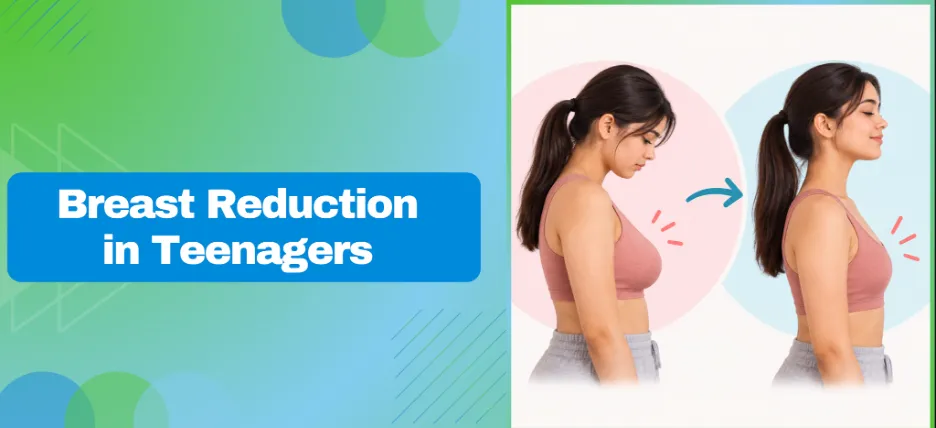
The problem for the teenager with extremely large breasts is not merely appearance-related. Back pain, pain in the neck, tightness of bras that cuts into the shoulders, rashes in the under breast area, discomfort in engaging in any type of physical activity, such as playing sport, swimming, or even attending school, are all the issues that may bother teenage girls with big breasts. The conflicting advice that their parents receive from doctors usually states either the need to postpone the operation until the girl reaches the age of an adult, or the requirement to carry out the procedure as soon as possible. However, the truth lies somewhere in-between.
Dr. Leena Jain, a Plastic Surgeon in Mumbai, explains:
“The breast reduction operation in a teenager is mostly a physical and psychological issue rather than a purely cosmetic one. Not a question of whether it can be performed, but rather whether it should be.”
So when is early surgery safe, when is it better to wait, and what should families know before deciding? Here is a detailed breakdown
Why Some Teenagers Need Breast Reduction
There is also a condition where breasts become too large for the body to hold comfortably. Here the surgery is a solution for a health and lifestyle problem and need to address an everyday issue; not just aesthetic concerns.
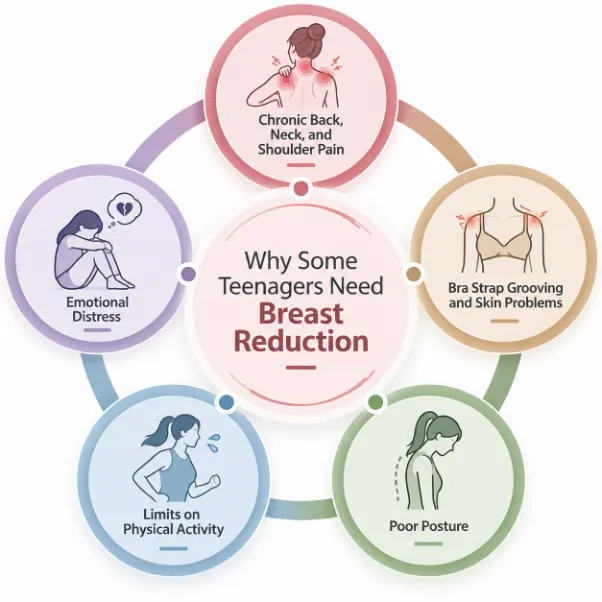
Chronic Pain in the Back, Neck, and Shoulders:
Excessively heavy breasts place strain on the spine and shoulders and cause constant discomfort, even when wearing well-fitted and properly designed supportive bras.
Deep Grooves from Bra Straps and Associated Skin Conditions:
Bra straps causes grooving along with rashes, irritation, and infections at the bottom of the breast fold -these can be messy to manage
Postural Changes:
Many adolescents slouch or slump to hide their chests, which further aggravates back pain.
Limitations of Physical Activities:
Participation in sports, gym lessons, running becomes either painful or embarrassing; often causing breathlessness.
Psychological Stress:
Body-image concerns can negatively affect academic performance and significantly affect emotional well-being.
Dr. Leena Jain notes:
“When a young patient tells me she has stopped playing sports or avoids school activities because of her chest, I take that as seriously as the back pain. Both are real reasons to consider treatment.”
Concerned about your daughter’s symptoms and unsure whether surgery is the right step? A private consultation can give you clear, honest guidance.
What Is the Right Age for Breast Reduction in Teenagers?
There is no single magic age, because every girl develops at her own pace. What matters most is whether the breasts have finished growing.
Breast Development Should Be Stable
Surgeons generally prefer that breast size has remained stable for at least six months to a year, since breasts that are still growing can enlarge again after surgery.
Physical Maturity Matters
Most girls reach this stage in their mid to late teens, although the timing varies from patient to patient.
Earlier Surgery in Severe Cases
When symptoms are significant and affect daily life, surgery can sometimes be considered earlier, with the understanding that some regrowth is possible and a second procedure may occasionally be needed.
Emotional Readiness Counts Too
A teenager should understand what the surgery involves, what the scars will look like, and what recovery requires, and she should feel involved in the decision rather than pushed into it.
Is Early Breast Reduction Safe?
In the right patient, with an experienced surgeon, breast reduction is a well-established and generally safe procedure, including for teenagers. Like any surgery, it carries risks that should be discussed openly.
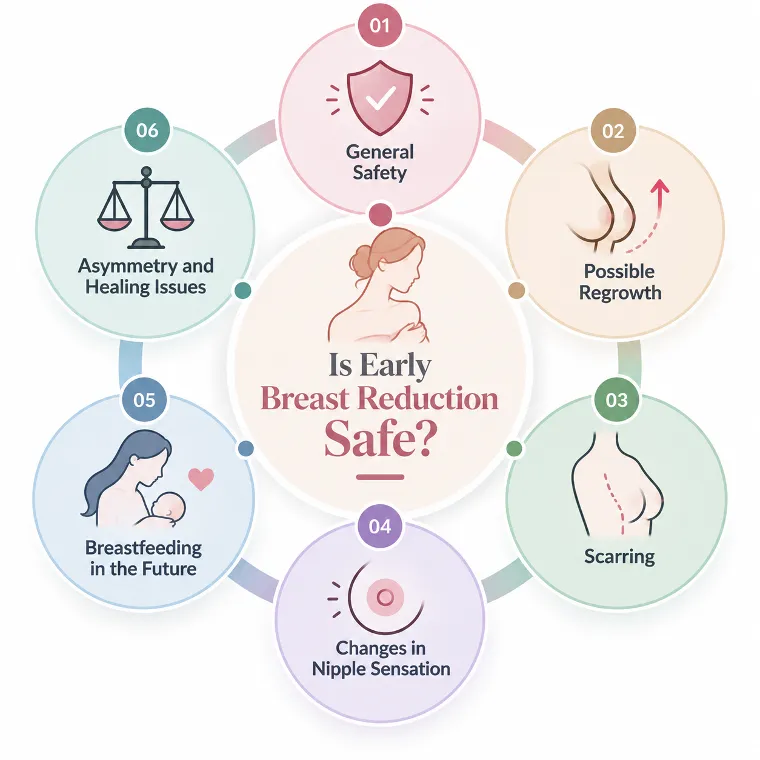
General Safety:
Healthy teenagers usually tolerate the procedure well, and studies on adolescent breast reduction have reported high satisfaction and meaningful relief from pain.
Possible Regrowth:
If surgery is done before the breasts have finished developing, some tissue can grow back, which is why timing is discussed carefully during consultation.
Scarring:
Breast reduction leaves scars around the nipple, down the breast, and sometimes along the crease beneath it. They fade with time but do not disappear completely.
Changes in Nipple Sensation:
Temporary or, occasionally, lasting changes in nipple sensation can occur after surgery; in heavy reductions.
Breastfeeding in the Future:
Some patients may have reduced ability to breastfeed later in life, depending on the technique used, and this should be explained clearly to the patient and her family.
Asymmetry and Healing Issues:
Minor differences between the two sides, or delayed wound healing, are possible, though uncommon in healthy patients.
According to the American Society of Plastic Surgeons, breast reduction is performed to relieve symptoms such as pain and discomfort caused by overly large breasts, and candidates are usually advised to wait until their breasts have fully developed whenever possible.
Non-Surgical Options to Try First
Surgery is not the first step for every teenager. Surgeons usually want to know that simpler measures have been given a fair trial.
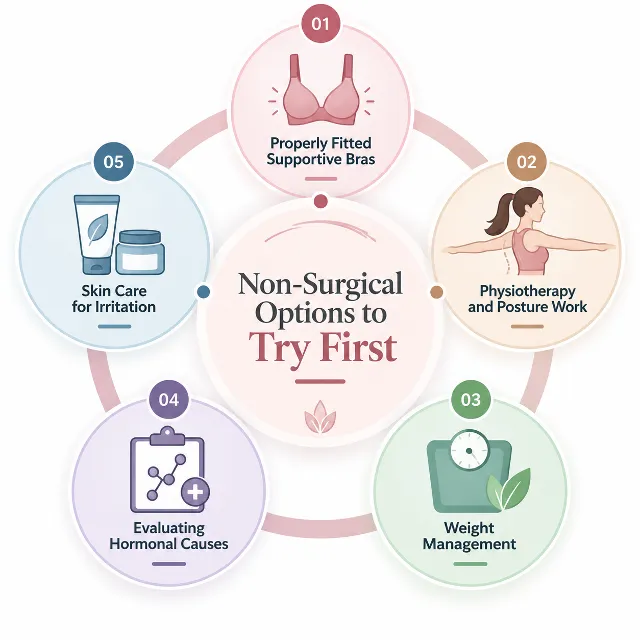
Properly Fitted Supportive Bras
A well-fitted, wide-strap supportive bra can ease pressure on the shoulders and reduce pain for some patients.
Physiotherapy and Posture Work:
Strengthening exercises for the back, core, and shoulders can improve posture and reduce discomfort.
Weight Management:
In some patients, healthy weight management can reduce breast volume, though it rarely resolves the problem completely when the cause is mostly glandular tissue in the breast.
Evaluating Hormonal Causes:
Occasionally, hormonal factors contribute to excessive breast growth, which is why a medical review is worthwhile before deciding on surgery.
Skin Care for Irritation:
Proper hygiene, barrier creams, and moisture control can help manage rashes under the breast while other options are explored.
Dr. Leena Jain adds:
“I never see surgery as the first conversation. But when a teenager has tried supportive bras, physiotherapy, and lifestyle changes for months and is still in pain, surgery becomes a reasonable and often life-changing option.”
Want to understand whether your teenager is ready for surgery or whether waiting makes more sense? Get a personalized assessment before deciding
How Breast Reduction Surgery Is Performed
Understanding the procedure helps both teenagers and parents feel more prepared and less anxious.
Consultation and Planning
The surgeon examines the patient, discusses her symptoms and goals, takes measurements and photographs, and explains realistic outcomes and scar placement. Parents are included in this conversation throughout.
Anaesthesia
Breast reduction is done under general anaesthesia, so the patient is asleep and comfortable throughout.
The Procedure
The surgeon removes excess breast tissue, fat, and skin, then reshapes the remaining breast and repositions the nipple. Surgery typically takes two to four hours, depending on the amount of tissue being removed. Patients considering other procedures after pregnancy or weight change can read more about breast surgery options and how they are planned.
Hospital Stay
Many patients go home the same day or after one night in the hospital, depending on the extent of surgery
Recovery After Breast Reduction in Teenagers
Teenagers often recover well, but a few weeks of rest and careful aftercare make a real difference to the final result.
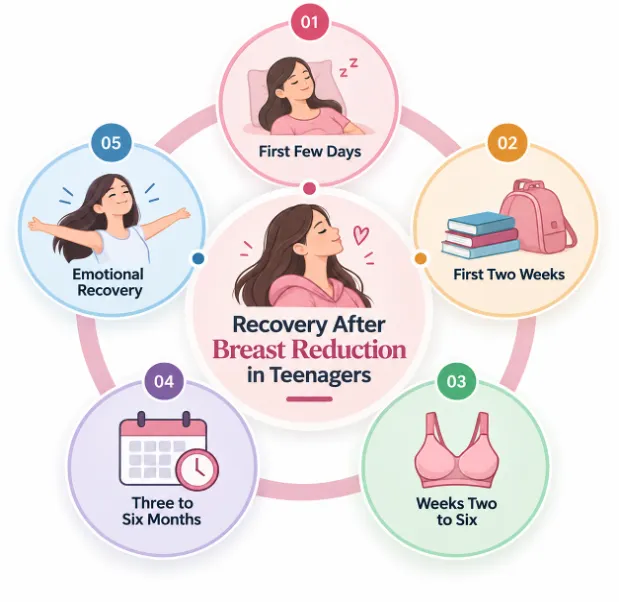
First Few Days
Swelling, bruising, and tenderness are expected and are managed with prescribed pain relief and rest.
First Two Weeks
Most patients return to school or light activities within one to two weeks, though carrying heavy bags and lifting should be avoided.
Weeks Two to Six
A supportive surgical bra is worn day and night, and sports, gym, and strenuous activity are usually restricted for around four to six weeks.
Three to Six Months
Swelling gradually settles, scars begin to fade, and the final breast shape becomes clearer. As with other reconstructive procedures such as a tummy tuck, the true result is only visible once tissues have fully healed.
Emotional Recovery
Many teenagers report a noticeable boost in confidence, comfort, and willingness to join in physical activities once they have healed.
When Should You See a Plastic Surgeon?
Parents and teenagers do not have to wait until symptoms become unbearable. A specialist evaluation is worth considering if:
Back, neck, or shoulder pain persists despite supportive bras and posture work
Deep bra strap grooves or recurrent rashes keep returning
Your daughter avoids sports, swimming, or school activities because of her chest size
Breast size appears to be stable and symptoms are affecting daily life
She is struggling with confidence or emotional distress related to her body
You want clear, unbiased information about timing, risks, and alternatives
Ready to take the next step with clear answers and no pressure? Schedule a consultation for a personalised assessment and honest guidance.
Conclusion
Breast reduction in teenagers can be safe and genuinely life-changing when the timing is right and the reasons are medical, such as chronic pain, posture problems, skin irritation, and emotional distress. Waiting until breast growth has stabilised usually gives the most predictable result, but severe symptoms can justify earlier surgery with a clear understanding of the risks. A thoughtful consultation, with the teenager and her parents involved, is the best way to make the decision with confidence.
FAQs
1. At what age can a teenager have breast reduction surgery?
There is no fixed age, but surgeons generally prefer that breast size has been stable for six months to a year, which usually happens in the mid to late teens. Earlier surgery is sometimes considered in severe cases.
2. Can breasts grow back after breast reduction in teenagers?
Yes, if surgery is done before breast development is complete, some regrowth can occur. This is why timing and breast stability are discussed carefully during consultation.
3. Will breast reduction affect breastfeeding later in life?
It can in some patients, depending on the amount of breast tissue removed. This possibility should be discussed openly with the surgeon before the decision is made.
4. How long does recovery take after breast reduction for a teenager?
Most teenagers return to school or light activity within one to two weeks, while sports and strenuous exercise are avoided for around six-eight weeks.
5. Is breast reduction in teenagers purely cosmetic?
In most cases, no. It is usually done to relieve back pain, shoulder grooving, skin problems, and emotional distress caused by very large breasts.
