
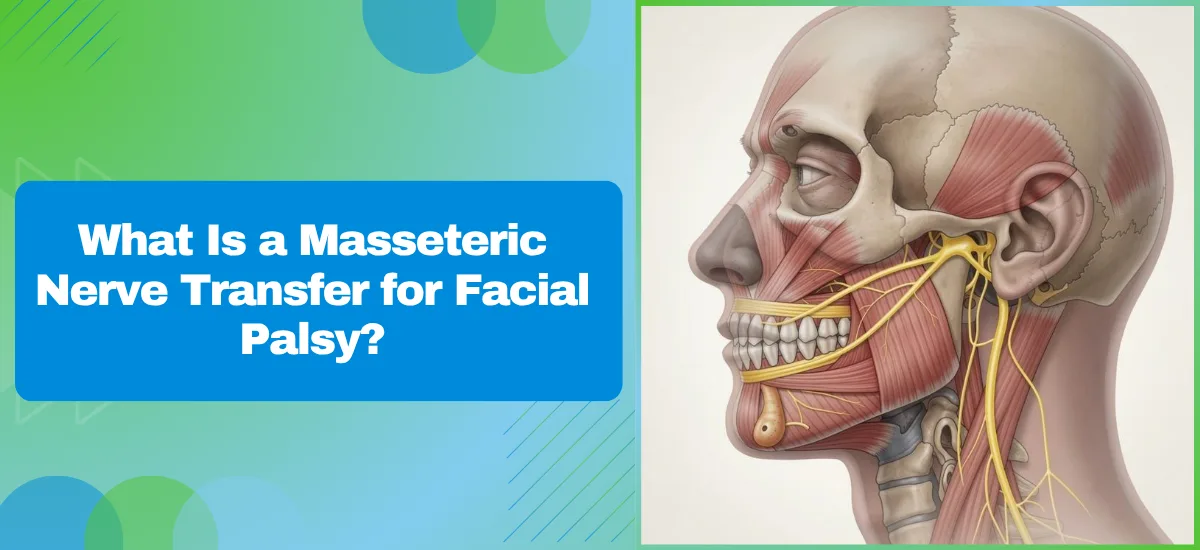
Facial palsy that has lasted for years doesn’t always mean the smile is gone for good. A masseteric nerve transfer, also called a 5-to-7 nerve transfer, is a microsurgical operation for people in that position. In facial reconstruction surgery the surgeon borrows a nerve from the chewing muscle and joins it to the facial nerve on the weak side. The brain takes a few months to learn the new route.
According to Dr. Leena Jain, a Plastic Surgeon in Mumbai, “The masseter nerve is a dependable donor and patients lose very little by using it. A smile starts as a clench of the teeth and with practice it becomes more natural.”
How Is the Nerve Transfer Carried Out?
Describing it takes a sentence. Doing it takes a surgeon trained in microsurgery and a good deal of patience at the operating table.- Donor nerve: The masseteric nerve drives the biting muscle in the cheek. Plenty of other muscles help with chewing so little is lost by borrowing it.
- Connection: Through an incision near the ear the surgeon joins it to the facial nerve branch that lifts the corner of the mouth.
- Two options: Sometimes the nerve revives the face’s own muscles. Sometimes it powers a transplanted muscle such as the gracilis.
- Training: Early on a patient bites down to make the smile appear. After months of practice the movement starts to happen without much thought.
Who Is Likely to Benefit and What Should They Expect?
Two questions decide most cases. How long has the palsy lasted? Can the facial muscles still respond?- Long-standing palsy: Surgeons often choose it when palsy has lasted past 18 to 24 months, which is usually too long for a cross-facial nerve graft.
- Congenital conditions: Moebius syndrome and certain other cranial nerve disorders are recognised reasons to use this nerve.
- Smile quality: A recent meta-analysis found good smile movement and symmetry compared with cross-facial grafting.
- Limits: Outcomes vary from person to person and a fully spontaneous smile can’t be promised.
What Is Recovery Like?
Nothing moves straight away. The nerve first has to grow into its new target and that takes months.- Early healing: Swelling near the ear fades over a few weeks. Hospital stays tend to be short.
- First movement: Many people notice a slight twitch somewhere around month three to six.
- Learning to smile: Facial therapy teaches the clench that sets off the smile. It also helps smooth the movement out as time goes on.
- Side effects: Mild synkinesis or temporary jaw tightness may occur. Chewing seldom changes.
Want to know if you are a suitable candidate for masseteric nerve transfer? Call to discuss your treatment options.
FAQs
Does the nerve connection last?
Yes. The connection is permanent and the smile can keep improving.
Will it affect chewing?
Usually not noticeably because other muscles take over the chewing work.
Can the smile become spontaneous?
Often partly with practice, though results differ between patients.
How long until movement appears?
Most people see the first movement three to six months after the operation.
- PMC — Masseter Nerve-Based Facial Palsy Reconstruction: https://pmc.ncbi.nlm.nih.gov/articles/PMC7933725/
- PMC — Postoperative Outcomes of Masseteric Nerve Transposition versus Cross-Facial Nerve Graft in Facial Reanimation: A Systematic Review and Meta-Analysis: https://pmc.ncbi.nlm.nih.gov/articles/PMC12858318/
Disclaimer: This article is for general educational purposes only. Consult a qualified specialist to discuss which facial palsy treatment suits your situation.
