
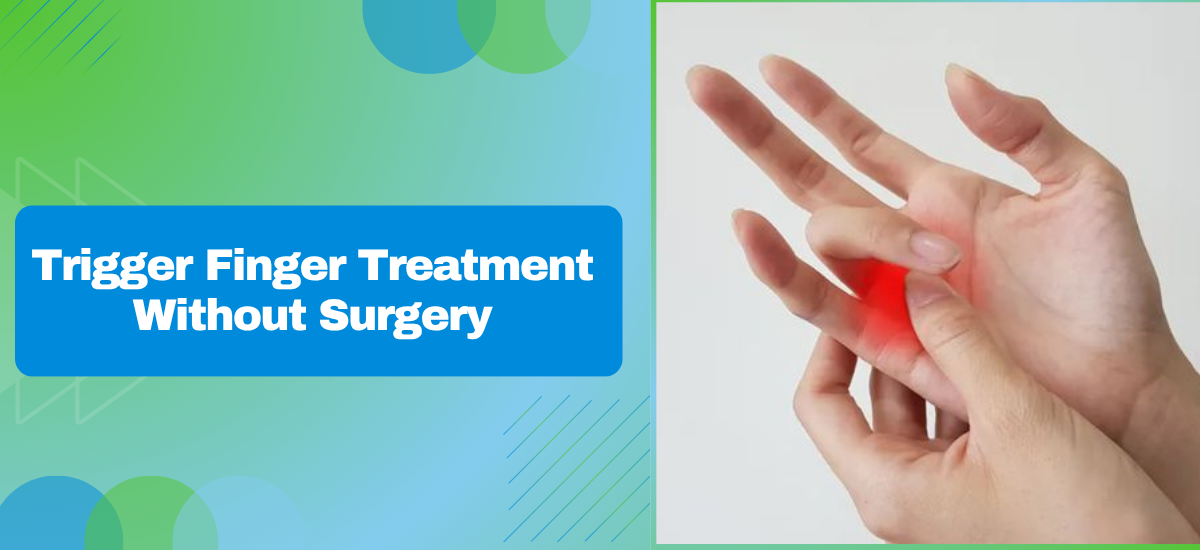
Trigger finger is a hand condition where a finger catches, locks, or snaps painfully when bent or straightened. And yes, many cases can be treated without surgery. Non-surgical options like splinting, anti-inflammatory measures, and steroid injections resolve a good number of cases. Because severity varies widely, the approach splits two ways. What works without an operation. And when surgery becomes necessary.
According to Dr. Leena Jain, plastic surgeon in Mumbai,Most trigger fingers respond well to non-surgical care if caught early, so the priority is settling the inflammation before the tendon problem becomes a mechanical one.
What Causes Trigger Finger?
Trigger finger develops when the tendon that bends the finger becomes inflamed or thickened, struggling to slide smoothly through its protective sheath. These are the main contributors.
Repetitive gripping Activities involving prolonged or forceful gripping, like using tools, gardening, or certain sports, irritate the tendon and its sheath over time.
Age and sex. It tends to appear between forty and sixty, and women develop it more frequently than men.
Health conditions Diabetes and rheumatoid arthritis are linked to a raised risk, so the condition sometimes accompanies other systemic issues.
Sudden inflammation Even without obvious overuse, an acute inflammatory flare can thicken the tendon enough to trigger symptoms in a previously normal finger.
The exact tipping point is not fully understood. What is clear is that once the tendon catches on the sheath, the cycle of inflammation and catching tends to worsen. Slowly at first, then more visibly.
For related tendon and finger conditions, this connects with Tendon Repair Surgery.
How Is Trigger Finger Treated Without Surgery?
The goal is simple. Reduce tendon inflammation and restore smooth gliding through the sheath. The method depends on how advanced the symptoms are.
Rest and activity modification Pausing the activities that aggravate the finger gives the tendon a chance to settle, which often helps mild cases on its own.
Splinting. A splint holds the finger straight, particularly overnight, preventing the catching cycle and allowing the tendon to recover over weeks.
Anti-inflammatory medication Oral anti-inflammatories can reduce swelling around the tendon, especially when symptoms are recent and mild.
Steroid injection A targeted injection into the tendon sheath reduces inflammation directly and resolves a significant share of cases without surgery.
When non-surgical care fails to relieve symptoms or the finger stays locked, surgery becomes the right next step. Carpal tunnel is often mistaken for trigger finger, so it helps to know how the two differ in trigger finger vs carpal tunnel.
Why Choose Dr. Leena Jain
Dr. Leena Jain is a Plastic, Reconstructive and Microsurgeon. She holds an MCh in Plastic Surgery and a Fellowship in Microsurgery and Perforator Flaps from Hanyang University, Seoul, with over 7 years across hand surgery and reconstructive microsurgery.
Patients with catching, locking, or painful fingers have regained smooth movement under her care, often through non-surgical management alone. She tailors the approach to symptom severity rather than defaulting to surgery.
Noticing a finger that catches or locks when you bend or straighten it?
FAQs
Is trigger finger painful?
Often yes, with pain at the base of the affected finger when bending or straightening it.
Can trigger finger heal on its own?
Mild cases can settle with rest and splinting, though many need targeted treatment.
How effective are steroid injections for trigger finger?
They resolve a significant proportion of cases, particularly when symptoms are recent.
When should trigger finger be operated on?
Surgery is considered when injections fail or the finger remains locked despite treatment.
