
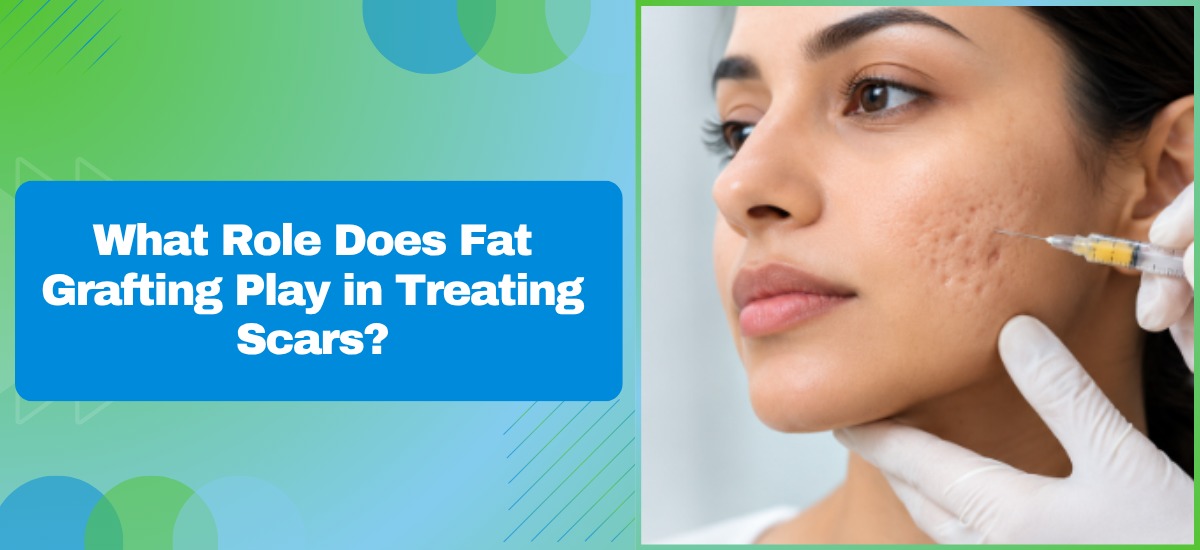
Scars come in many forms, and fat grafting (sometimes called lipofilling) is used on quite a few of them. Burn scars, surgical scars and the sunken marks that severe acne can leave all qualify. The treatment puts back volume that has been lost, loosens stiff scar tissue and brings stem cells into the area. That’s one reason fat grafting for scar treatment shows up in so many scar plans.
According to Dr. Leena Jain, a Plastic Surgeon in Mumbai, “I tell patients at the first visit that fat grafting won’t make a scar vanish. It does do well with scars that are tight or sunken, though. Plenty of people say the skin around the scar feels softer afterwards. Results take months to appear and a second session isn’t unusual.”
In What Ways Does Fat Grafting Help a Scar?
Fat placed beneath a scar works on it in a few ways at the same time.
- Volume: When a scar sinks below the surrounding skin, fat fills the gap and the surface levels out.
- Softening rigid tissue: Scars often pin the skin to the layers underneath. Working a thin, blunt cannula through the area releases them, and many patients feel less pulling and tenderness afterwards.
- Stem cells: Fat carries adipose-derived stem cells, and they’re believed to help skin texture and elasticity recover slowly. Colour can improve too.
- Combination treatment: Some surgeons pair the graft with laser or nanofat. A few studies found that pairing gave better results than either treatment on its own.
Work of this kind belongs to skin plastic surgery. Our Post-Burn Deformity & Contracture page shows how scars get assessed more broadly.
Which Scars Respond Best and Where Does It Fall Short?
Results vary a lot from one scar to the next.
- Atrophic scars: Sunken scars, including some left by severe acne, gain the most from restored volume and release.
- Burn and contracted scars: A systematic review of burn scars found that scar quality and patient satisfaction got better. Function improved too, but only modestly.
- Surgical scars: A tight scar left by an operation can loosen and move more freely once fat is placed underneath.
- Evidence limits: One randomised trial found saline worked about as well as fat, so nobody can yet say exactly how the benefit arises.
Raised scars need a different approach. Our article Can Keloid and Hypertrophic Scars Be Surgically Treated? covers why.
What Should You Expect From the Procedure and Recovery?
It’s usually done as a day case, so most people go home that evening.
- Harvest: The surgeon uses gentle liposuction to take a small amount of fat from the abdomen or thigh.
- Preparation and injection: The fat is processed first, then injected in fine threads beneath and within the scar.
- Recovery: Bruising and swelling at both sites usually clear within a couple of weeks.
- Results: Some of the fat is reabsorbed. Improvement therefore comes slowly and a repeat session is sometimes needed.
Surgeons use fat grafting well beyond scars. We cover a very different use in Can Fat Grafting Replace Implants in Breast Reconstruction?
Key Takeaway: Fat grafting can soften tight scars, fill sunken ones and change how the skin looks and feels. It usually works best as one piece of a wider scar plan, not a cure on its own. Results build over several months, and the stem cell explanation is still being tested.
Curious how fat grafting is used for different types of scars?
FAQs
Does fat grafting remove a scar?
No, the scar stays, but it usually becomes softer and less noticeable. Complete erasure isn’t a realistic goal.
How many sessions will I need?
It differs from scar to scar. Some people need just one, and others return for a second round since part of the fat gets reabsorbed.
Is fat grafting suitable for acne scars?
It can help sunken acne scars by adding volume back. Shallow pitted scars usually need other treatments alongside it.
When will results start to show?
Some softening can appear within a few weeks. Most of the benefit settles in over the following months.
References:
- PMC — Autologous Fat Grafting for Scars, Healing and Pain: A Review: https://pmc.ncbi.nlm.nih.gov/articles/PMC5965331/
- PMC — Autologous Fat Grafting and Adipose-Derived Stem Cells Therapy for Acute Burns and Burn-Related Scar: A Systematic Review: https://pmc.ncbi.nlm.nih.gov/articles/PMC11025588/
Disclaimer: This article is for educational purposes only. Consult a qualified hand surgeon for advice on your specific condition.
