
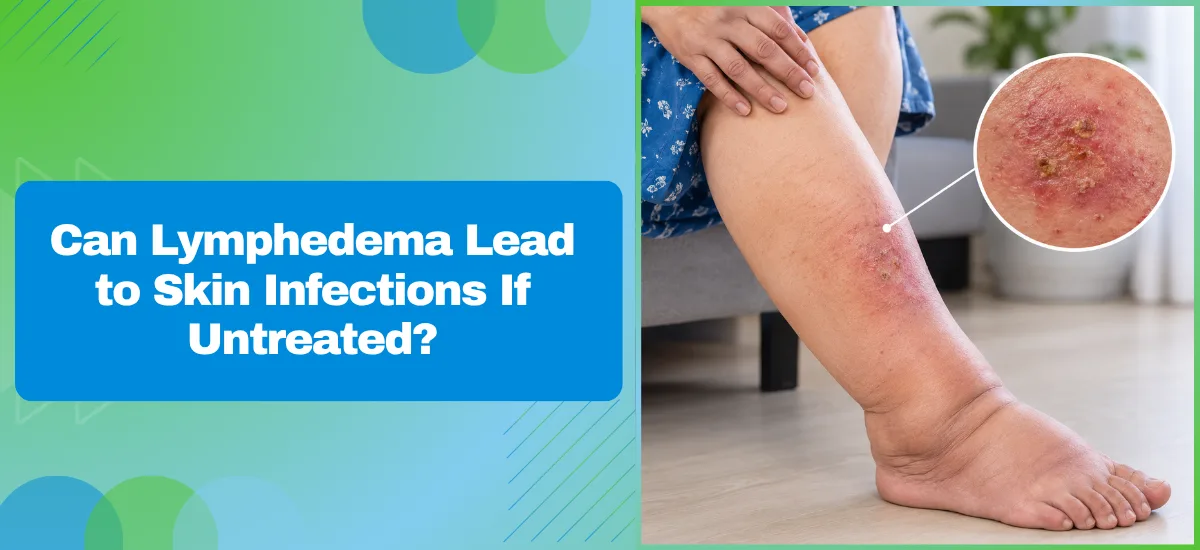
Yes. When lymph can’t drain, protein-rich fluid stagnates in the tissue, and bacteria and fungi grow easily in it. That’s why the lymphedema skin infection risk rises the longer swelling goes untreated, with cellulitis being the usual result. Each infection can also damage the lymph vessels further, so the swelling becomes harder to control.
According to Dr. Leena Jain, plastic surgeon in Mumbai, “Fluid trapped in the tissue weakens the local immune response. Infection usually enters through a small crack or fungal patch that goes unnoticed. Controlling the swelling is the best way to reduce infections.”
Why Are Swollen Limbs More Prone to Infection?
A limb isn’t infected simply because it’s swollen. But the swelling changes the skin and its defences in ways that make infection easier.
- Protein-Rich Fluid: Bacteria and fungi do well on the protein that lymph leaves behind. In a limb that has been swollen for months, there’s rarely a time when it isn’t there.
- Weaker Local Defence: Immune cells and debris normally leave the tissue through the lymph vessels, and damage to them slows that clearance down. A small break in the skin can therefore turn into an infection when it otherwise wouldn’t.
- Skin Breakdown: Skin over a chronically swollen area often turns thick, dry, and fragile, with cracks around the ankle or wrist being typical. Most cellulitis is caused by streptococcal bacteria, and a hairline split is enough for them.
- Fungal Patches: Tinea between the toes goes unnoticed more often than you’d expect, because a swollen foot hides the toe web. The damp, cracked skin it leaves is where bacterial infection frequently starts.
A first episode of cellulitis often isn’t the last, and repeated ones leave scarring in the lymph vessels. That’s where regular lymphedema treatment earns its place, since reducing the swelling reduces the chance of a repeat.
What Can Be Done at Home to Prevent Infection?
Day-to-day care does most of the work here. It’s mainly a matter of keeping the skin intact and the swelling down.
- Skin Care: A mild cleanser is enough, as long as the skin is dried properly afterwards, especially between toes or fingers and in folds. Moisturise daily with a fragrance-free product so the skin doesn’t crack.
- Compression: Garments or bandages, fitted by a trained therapist, stop fluid from building up again once it’s been reduced. A poor fit can cut into the skin or let swelling creep back, so it’s worth rechecking now and then.
- Small Wounds: Cuts, insect bites, and scratches from pets or gardening are easy to brush off. Washing and covering them takes a minute, and gloves and careful nail trimming prevent many of them.
- Fungal Treatment: Peeling or itchy skin between the toes is worth treating early with an antifungal. Left alone, it’s a frequent way in for the bacteria that cause cellulitis.
If redness starts to spread, or warmth or a fever develops, a doctor should see the limb. Other daily habits are covered in What Habits Help After Cancer Surgery Lymphedema?
What Determines the Treatment Plan?
The plan depends on how advanced the swelling is and on the person’s infection history. A limb that looks only mildly swollen can still have a record of repeated cellulitis, and that changes the approach.
- Stage of Lymphedema: In the early stage, when the swelling is soft, compression and manual lymphatic drainage are often enough to bring it down. Once the tissue has hardened, those measures help less.
- Infection History: People who’ve had repeated cellulitis may be offered preventive antibiotics alongside daily care. Obesity adds to the risk of recurrence and is usually addressed too.
- Response to Conservative Care: When swelling and infections continue despite consistent care, surgery enters the discussion. That’s the point at which a surgical opinion becomes useful.
- Surgical Options: In selected patients, plastic reconstruction of the lymph pathways is an option, either by lymphatic bypass or by moving healthy lymph nodes into the limb. Neither is a cure, but better drainage can mean less fluid for infections to build on.
Overall health and what the patient wants from treatment also weigh on the decision. The surgical routes are compared in Which Lymphedema Surgery Suits You: LVA or Node Transfer?
Key Takeaways: Swollen tissue that can’t drain holds protein-rich fluid, and bacteria and fungi tend to do well in it. Dry, cracked skin and small fungal infections are the usual ways in. Cellulitis tends to return, and each bout can make the swelling worse. Compression, daily skin care, and washing small wounds early all cut the risk. If infections keep recurring despite good care, it’s reasonable to ask a surgeon whether lymphatic reconstruction is an option.
Unsure if your swelling needs review?
FAQs
Can lymphedema cause cellulitis?
It can, and it’s one of the main risk factors for repeated cellulitis. Bacteria find it easier to spread through swollen tissue, where local immunity is sluggish.
What does an infection in a swollen limb look like?
The skin turns red and warm, the area hurts, and the swelling often increases quickly. If a fever or chills appear as well, the infection may have spread beyond the skin.
Can infections make lymphedema worse?
They can. Repeated infections leave scarring in the lymph vessels, and the swelling becomes harder to keep under control.
Will treating the swelling cut down infections?
Usually, yes. When the swelling is controlled and the skin stays intact, bacteria have fewer ways in.
References
- PMC: Cellulitis in chronic oedema: https://pmc.ncbi.nlm.nih.gov/articles/PMC8327126
- PMC: In Search of Risk Factors for Recurrent Erysipelas and Cellulitis of the Lower Limb: https://pmc.ncbi.nlm.nih.gov/articles/PMC7229562
Disclaimer: This blog is for educational purposes only. Consult a doctor if an affected limb shows redness, warmth, or increasing swelling.
