
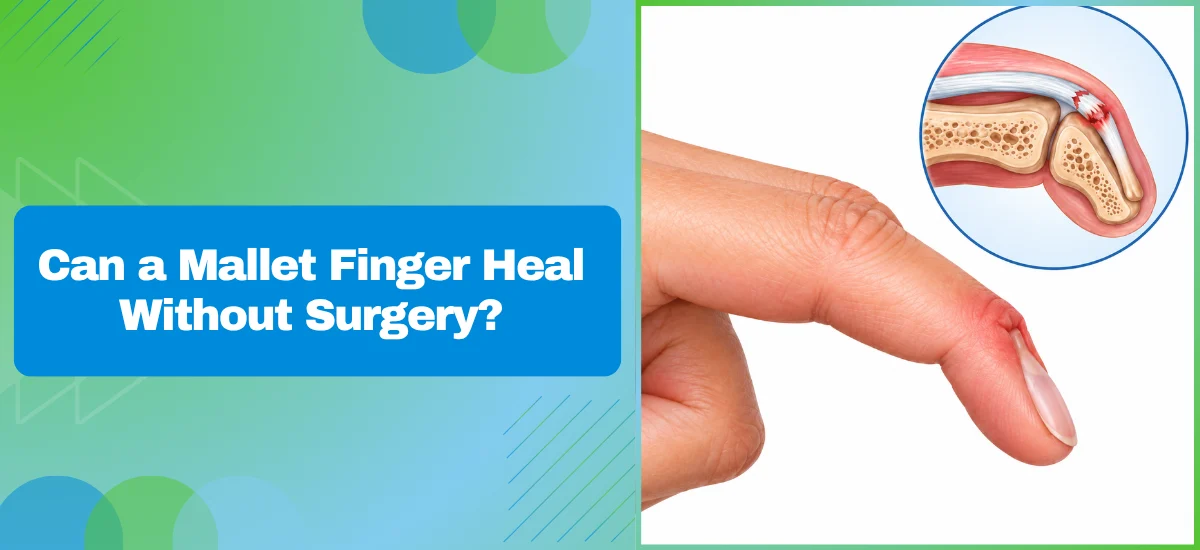
Most mallet finger injuries do heal without an operation. The usual mallet finger treatment is a splint that keeps the fingertip straight for several weeks so the tendon can knit back together. Surgery is needed for only a few.
According to Dr. Leena Jain, a Plastic Surgeon in Mumbai, “Mallet finger usually follows a blow to the fingertip, from a ball for example. The tendon that straightens the end joint tears, and sometimes it takes a small piece of bone with it. The tip then drops and can’t be lifted on its own. A splint that holds the joint straight, worn all the time without breaks, lets the tendon heal in most people.”
How Is a Mallet Finger Treated Without Surgery?
A mallet finger is a tendon injury at the tip of the finger, where the tendon that straightens the end joint has torn. Left untreated the tip stays bent.
- What happens: A force on the fingertip tears the extensor tendon or pulls off a small piece of bone. The end joint then droops and can’t be straightened by the person’s own effort.
- Continuous splinting: A splint holds the end joint straight, usually for six to eight weeks. Wear it day and night, since one bend can undo the healing.
- Tapering afterwards: Once the full-time weeks are over, many people keep wearing it at night or for heavy use for a while longer. That protects the tendon as it regains strength.
- Skin care and checks: The skin under the splint needs cleaning and drying. While that happens the fingertip must rest straight on a flat surface. Regular reviews check the finger position and the skin.
Splinting is a standard part of hand finger plastic surgery, and our Hand Surgery page explains how finger and tendon injuries are assessed.
How Well Does Splinting Work and Who Needs Surgery?
Most people regain full use of the finger with a splint alone. A few injuries have features that make surgery the better choice.
- Good results: Most patients regain full movement and normal use. Hand surgery societies recommend a splint as the first treatment.
- Residual droop: Up to 12 percent of fresh injuries and about 25 percent of delayed ones are left with a small droop, meaning the tip can’t fully straighten. Starting late doesn’t rule out a good result.
- Bone fragments and joint shift: Surgery may be needed when a large bone fragment is involved or the joint has slipped out of place. An X-ray shows whether this applies.
- Open or failed cases: A cut that exposes the tendon, a splint that hasn’t worked or a person who can’t wear one safely may also lead to surgery. The aim stays the same: keep the tip straight while the tendon heals.
A splint works only if it’s worn exactly as advised. Trigger finger is another hand problem that often improves without an operation, and our article What Is Trigger Finger and Can It Be Treated Without Surgery? covers it.
What if the Splint Comes Off Early or Surgery Is Needed?
Treatment most often fails because the splint comes off too soon. Surgery, when it’s needed, rests on the same idea of keeping the joint straight.
- Early removal: One bend of the fingertip can stretch the healing tendon. The droop then returns and the splinting period may have to restart.
- Untreated injury: If a mallet finger is simply left alone the tip can stay bent for good. Some fingers also develop a swan-neck shape, where the middle joint bends back too far.
- Surgical options: Surgery can mean a thin wire across the joint to hold it straight, fixing the bone fragment or repairing the tendon itself. A splint is usually still needed afterwards.
- Late cases: Long-standing mallet fingers can sometimes still be splinted. A tendon procedure is considered if the droop is troublesome and the benefit outweighs the effect on finger movement.
Whichever route is chosen, tendon recovery takes time. For a closer look at why therapy and patience count, read How Long Until You Regain Full Movement After Flexor Tendon Surgery?
Key Takeaway: Most mallet finger injuries heal with a splint worn without breaks for six to eight weeks. Surgery is kept for large bone fragments, joints that have shifted, open injuries and splints that haven’t worked. Keeping the splint on matters more than anything else.
Want to know how a splint heals a mallet finger and when surgery is considered?
FAQs
How long must a mallet finger splint be worn?
Usually six to eight weeks without a break, then part-time for a few more weeks. Bony injuries may need a shorter spell and tendon injuries a longer one.
Can I take the splint off to wash?
Yes, but only with the fingertip held straight and resting on a flat surface throughout. If it bends even once the weeks of healing can be lost.
Can a mallet finger heal if I treat it late?
Often it can. A small droop is left more often after late treatment, but a splint is still worth trying, so it’s better to see a hand specialist than to ignore it.
Will the finger go back to normal?
Most people get full movement back. A small bump at the joint or a slight droop can remain, but it rarely affects how the hand works.
References
- PMC — Approach to Mallet Finger Injury: Practical Guide for Canadian Primary Care Physicians: https://pmc.ncbi.nlm.nih.gov/articles/PMC12898726/
- PMC — Outcome Differences between Conservatively Treated Acute Bony and Tendinous Mallet Fingers: https://pmc.ncbi.nlm.nih.gov/articles/PMC10607461/
Disclaimer: This article is for general educational purposes only. If you have a fingertip injury with a drooping finger, consult a qualified hand specialist promptly.
