
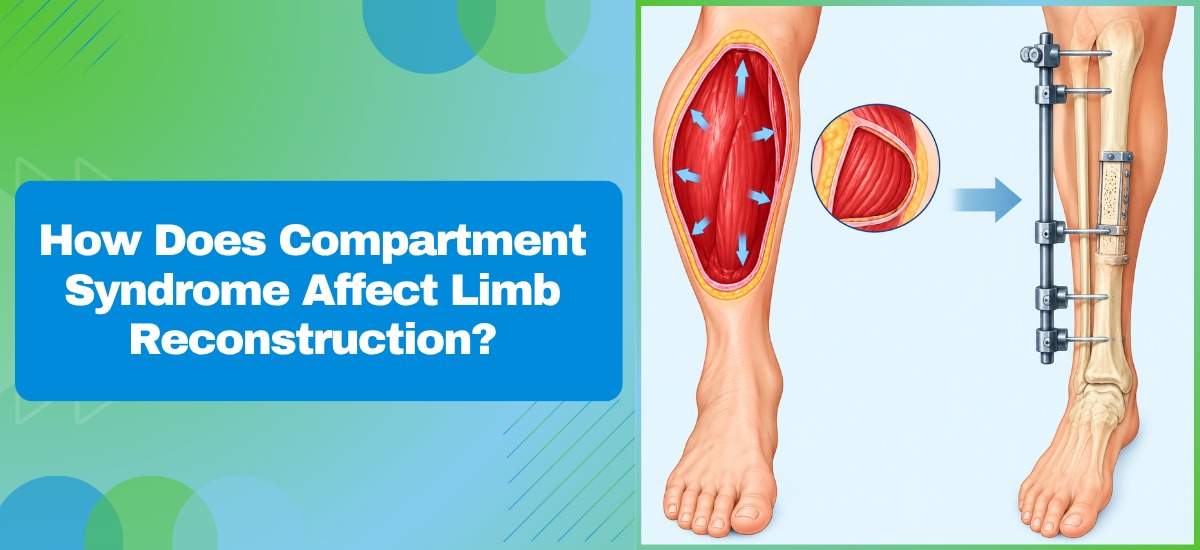
Compartment syndrome limb surgery starts with releasing the pressure, and the damage it uncovers decides how rebuilding goes. Pressure trapped in a muscle compartment cuts off blood flow, so muscle and nerve can die, and repair has to be planned around that loss and delayed until the pressure is released.
According to Dr. Leena Jain, plastic surgeon in Mumbai, “Release saves the limb but leaves a large open wound and sometimes dead muscle. Reconstruction begins once the damage has been mapped and the tissue is stable.”
What Goes Wrong Inside the Limb?
Limb muscles sit in tight fascial compartments. When pressure rises there, blood can’t get in.
- Falling Blood Flow: The smallest vessels give way first, so tissue can lack oxygen while a pulse is still palpable. Waiting for the pulse to vanish means waiting too long.
- Muscle Death: Muscle survives poor blood supply for only a few hours. Dead muscle can’t be saved and must be removed.
- Nerve Injury: Nerves in the compartment lose blood too. Some numbness or weakness can linger afterwards.
- Scarring and Contracture: Badly damaged muscle that survives heals as scar, and scar shrinks. Over months that can lock a hand or foot in place.
Reconstruction has to answer for these losses. They’re assessed during limb reconstruction surgery planning.
How Does It Change the Reconstruction Timeline?
Reconstructive procedures are staged around what the wound and swelling allow. At first the priority is keeping the remaining muscle alive.
- Open Fasciotomy Wounds: Release incisions often stay open for days, since swollen tissue won’t close safely. Theatre revisits check which muscle is alive.
- Removing Dead Tissue: Muscle that has died is removed, sometimes over several operations. The defect left is often bigger than expected.
- Delayed Closure and Cover: Once swelling falls, edges may be eased together or grafted. Exposed bone, tendon, or metal needs a flap, since grafts won’t take.
- Later Function Repairs: Once the limb has settled, tendon transfers, contracture release, or nerve surgery can win back movement. These come months later.
Sealed suction dressings often bridge this waiting period. How they work is explained in What Is the Role of Negative Pressure Therapy in Wound Healing?
What Determines the Treatment Plan?
Plans vary widely, from simple cover to full muscle reconstruction. The patient’s own needs count too.
- Extent of Muscle Loss: A small patch of dead muscle may need only cover, but a lost compartment can need muscle or tendon reconstruction. A second look in theatre helps decide.
- Fracture and Implants: Many cases follow a broken shin or forearm, and the fracture still has to be stabilised. Exposed plates or bone usually need flap cover.
- Nerve and Vessel Status: Damaged nerves or main vessels mean reconstruction must restore feeling and blood flow too. In some limbs salvage itself is in doubt.
- Patient Health and Goals: Smoking and diabetes slow healing, and other injuries can reorder the operations. Work and daily needs shape which functions come first.
In severe cases, whether to save the limb at all becomes the question. It’s explained in How Does Limb Salvage Surgery Prevent Amputation?
Key Takeaways
Compartment syndrome starves a limb of blood, and the muscle and nerve loss sets the terms for reconstruction. After release, dead tissue is cleared and wounds are covered in stages.
Curious how emergency release leads to reconstruction?
FAQs
Why can’t reconstruction start straight away?
The swelling has to settle first. Operating earlier risks further tissue loss and infection.
Does compartment syndrome always cause permanent damage?
No, especially when pressure is released early. Less muscle can be saved the longer pressure stays.
Do fasciotomy wounds always need a skin graft?
Not always. Many close by delayed suturing, and grafts or flaps are used when they can’t.
Can function be restored after muscle loss?
Often partly, through tendon transfers, contracture release, and therapy. It depends on the muscle and nerve lost.
References
- PMC: Optimising Wound Closure Following a Fasciotomy: https://www.ncbi.nlm.nih.gov/pmc/articles/PMC6839671/
- PMC: Time to Wound Closure in Lower Extremity Fasciotomy: A Retrospective and Systematic Review: https://www.ncbi.nlm.nih.gov/pmc/articles/PMC12695471/
Disclaimer: This blog is for educational purposes only. Consult a doctor if a limb injury causes worsening pain or tight swelling.
